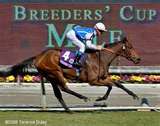
In what might be the greatest revenge in the stallion community since the success of Alydar over Affirmed, Stay Thirsty appears destined to do the same to Uncle Mo. The Uncle Mo/Stay Thirsty rivalry on the track does not compare to the battle tested years Affirmed and Alydar went at each other. Alydar and Affirmed (photo right) met five times as 2-year-olds and four more times at age three. Affirmed won seven times including the epic Triple Crown of 1978; and Alydar won two, including their last meeting in the 1978 Travers when he won through the disqualification of Affirmed.
At stud, Alydar was a major success producing Belmont winner Easy Goer and Kentucky Derby, Preakness and Breeders’ Cup Classic winner Alysheba among his get. He was the leading sire in North America in 1990, sire of 10 champions and his runners earned more than $24 million. Affirmed became known more as a producer of turf runners, with perhaps his best runners being the multiple grass champion filly Flawlessly; and Arlington Million winner The Tin Man. Affirmed had similar numbers as Alydar with 9 champions, but Alydar’s stallion career ended at the peak of his productivity when he mysteriously suffered a shattered leg while in his stall and had to be euthanized.
Stay Thirsty and Uncle Mo met only twice on the track, both in Breeders’ Cup races at Churchill Downs. Last year, Stay Thirsty was fifth to Uncle Mo’s victory in the Juvenile. This year Uncle Mo and Stay Thirsty finished 10th and 11th respectively in the Classic. So they really didn’t have much of a rivalry on the track.
But there was a rivalry for recognition between the two, especially since both came from the same shed row of trainer Todd Pletcher and raced for outgoing owner Mike Repole. And no matter what he did, Stay Thirsty seem to ever remain in the shadow of his stable mate Uncle Mo.
Uncle Mo was everybody’s all-everything from the time he broke his maiden by 14-1/2 lengths at Saratoga through his undefeated championship season and being the winter racebook favorite to win the Kentucky Derby. Meanwhile, during his 2-year-old seaso, Stay Thirsty had finished second to Boys At Toscanova in the Hopeful Stakes after breaking also breaking his maiden at Saratoga, but only by five lengths. Stay Thirsty went into the Juvenile as an anonymous 13-to-1 shot and came out as a fifth-place whatchmacallit.
Things looked up for Stay Thirsty (photo left) after winning the Gotham Stakes at Aqueduct in early March, but after a seventh-place finish in the Florida Derby and a 12th in the Kentucky Derby, Stay Thirsty was moving ever closer to staying home. A second-place finish to Ruler on Ice in the Belmont Stakes awoke some, but not enough to make Stay Thirsty the favorite in his next start, the grade 2 Jim Dandy Stakes. Stay Thirsty won the Jim Dandy impressively by four lengths and went to the Travers as the favorite, but only by one dime to the dollar more popular. Stay Thirsty was 2.5-to-1 in the Jim Dandy and the 2.4-to-1 favorite in the Travers.
As if aware of the slight, Stay Thirsty galloped around the Saratoga oval and won the Travers nearly gate-to-wire and suddenly he was atop the 3-year-old class looking down. In his first test against older horses in the grade 1 Jockey Club Gold Cup, Stay Thirsty was a good third behind eventual Classic winner Drosselmeyer and Classic favorite Flat Out. He looked primed to be competitive and possibly be among the favorites for the Classic.
But earlier that same day at Belmont, Uncle Mo had turned heads by winning the grade 1 Kelso Mile in only his second race after being sidelined and missing the Triple Crown. And during the weeks leading up to the Breeders’ Cup Classic, Uncle Mo again took the spotlight from Stay Thirsty.
Owner Mike Repole decided to run Uncle Mo in the Classic instead of the Dirt Mile and before the Classic, Uncle Mo would go off at 5-to-1 odds compared to Stay Thirsty back in double digits at 11-to-1.
Uncle Mo will have a year to get the jump on Stay Thirsty in the breeding shed, but I doubt it will make much of a difference.
Uncle Mo begins his stallion career as the grandson of In Excess (Ire), one of the top stallions in California before being pensioned in July. Stay Thirsty, who will race at age four according to his Facebook page, will begin his stallion career next year as the grandson of A.P. Indy, one of the top stallions of his generation.
Uncle Mo is by Indian Charlie, whose first runners hit the track in 2002 and who stood last year at Airdrie Stud in Midway, Kentucky for $70,000. On the track, Indian Charlie’s biggest win came in the 1-1/8 mile Santa Anita Derby. As one might expect from his racing career, Indian Charlie has had a difficult time producing any runners that could go to the next level at 1-1/4 miles.
Stay Thirsty is by Bernardini, winner of the Preakness, Travers and Jockey Club Gold Cup - two of which are at the classic distance of 1-1/4 miles. After his first crop hit the track this year as 3-year-olds with Stay Thirsty and To Honor and Serve among them, Bernardini’s fee has been raised to $150,000 by Darley Stud in Lexington, Kentucky.
Uncle Mo has the 2-year-old championship but in the end, Stay Thirsty has something much more important to breeders’, a grade 1 win at 10 furlongs (1-1/4 miles). In fact, Uncle Mo never won at 1-1/8 miles, finishing third in the Wood Memorial in his only attempt at that distance. Stay Thirsty won the 9 furlong Jim Dandy and 1-1/4 mile Travers.
Americans are known to breed for speed and Uncle Mo is well armed with pedigree and past performances to produce that in his runners.
But Americans still pay for distance. And Stay Thirsty will be much more likely to produce winners who can compete at the Classic distance. And likely to some day emerge from the Shadow of Uncle Mo and shine as if he was Alydar himself.
Showing posts with label Breeders' Cup Classic. Show all posts
Friday, November 11, 2011
Wednesday, November 2, 2011
Process of Elimination Produces Classic Winner
There is money to be made betting on the Breeders’ Cup Classic this year.
The large 13-horse field will create large pools and Uncle Mo, the popular Champion 2-Year-Old Male and Breeders’ Cup Juvenile winner from last year, is the very beatable morning line favorite at 5-2. Uncle Mo is by the respected sire Indian Charlie who commands a $70,000 fee from his home at Airdre Stud in Midway, Kentucky. Since his first crop hit the track in 2002, Indian Charlie has produced more than 1,000 winners and more than 100 stakes wins. Along with Uncle Mo, Indian Charlie’s daughters Fleet Indian and Indian Blessing were also champions. Of the three, however, only Fleet Indian won at the Classic distance of 10 furlongs (1.25 miles). She won both the Personal Ensign Stakes in New York and the Delaware Handicap, both at 1-1/4 miles.
Indian Charlie’s nine furlong stigma is further illustrated by his racing career. After winning the prestigious 1-1/8 mile Santa Anita Derby, he finished third to Real Quiet in the Derby. The comment in the Daily Racing Form official chart for Indian Charlie, “held on well to the final furlong then weakened.” In other words, at nine furlongs Indian Charlie was a world beater. But between that last green and white pole and the finish line of a 1-1/4 race, folks from episode one of Biggest Loser were faster.
Combine his distance challenged genetics with his preparation for the Classic in the one mile Kelso Handic ap Oct. 1 at Belmont, and Uncle Mo gets cut from my list of top contenders. Be mindful that Uncle Mo should be the one to catch turning for home and should keep that lead deep into the stretch. So don’t leave him out of any exotic tickets you are considering.
Havre de Grace, the popular 4-year-old filly that already defeated older males this year in the Woodward Stakes, also gets crossed off my Classic list. Should she prove me wrong and win the Classic, Havre de Grace should become the third consecutive female Horse of the Year.
But questions were raised about her training when she abruptly stopped after a five furlong work in 1:02 flat Monday at Churchill. A week earlier at Keeneland, Havre de Grace put in a quick five furlong work over their polytrack, stopping the clock in :58.3. Everything else on her past performances places her among my top choices, but the quick stop in the work is enough of a red flag in a race as competitive as this Classic.
Ruler On Ice, Ice Box, Rattlesnake Bridge and Headache are all long shots, each listed at 30-1 in the morning line. The handicapping paradox however, is that these four represent the only closers in this year’s Classic. Five of the seven Breeders’ Cup Classic winners at Churchill Downs have come from well off the pace including last year’s winner Blame. Closers are also known to have done well in the Kentucky Derby in recent years, giving additional credence to assumption.
It is always difficult to exclude trainer Nick Zito, but his Ice Box has been defeated by nearly 30 lengths in his last two races. History shows that horses need to come into the Classic off of a much better efforts than that. No horse has won the Classic without finishing first, second or third in their final start before the Classic. Rattlesnake Bridge, while third in the Pennsylvania Derby last out behind To Honor and Serve and Ruler On Ice, has never hit triple digit Beyer numbers which makes it difficult to imagine him hitting that big race Saturday. Headache is also speed figure challenged but he has three career wins at Churchill Downs. Ruler On Ice has the Belmont Stakes on his resume so distance should not be a challenge for him and his performance in the Pennsylvania Derby last race was strong.
Game On Dude, winner of the 10 furlong Santa Anita Handicap in March and the Goodwood at 1-1/8 miles in October, has had a difficult time putting together two consecutive good starts. He did win an Optional Claiming before winning the Santa Anita Handicap, but failed to win in the next four starts until the Goodwood. A close second in the Hollywood Gold Cup and a fourth in the Pacific Classic were among those losses, but he looks to need to take a step up from even his career best to win Saturday.
Stay Thirsty and To Honor and Serve were both on the road to the Kentucky Derby earlier this year but only Stay Thirsty made it. Unfortunately, he finished 12th. In fact, Stay Thirsty has had two starts at Churchill, neither with much success with a fifth in the Breeders’ Cup Juvenile last year under the twin spires. Stay Thirsty skipped the Preakness, returned in the Belmont to finish second to Ruler on Ice and eventually became the star 3-year-old of the summer. After two big wins in the Jim Dandy and Travers, he was a solid third in the Jockey Club Gold Cup behind Classic foes Flat Out and Drosselmeyer.
To Honor and Serve also comes into the Classic on a two-race winning streak, taking the Pennsylvania Derby in his last race winning at optional claiming race against older horses at Saratoga before that.
However, neither Stay Thirsty nor To Honor and Serve look quite exceptional enough to win the Classic as 3-year-olds.
The three older horses that will be getting plenty of support will be European invader So You Think (NZ); and Flat Out and Drosselmeyer, the top two finishers in the Jockey Club Gold Cup respectively. Euros, Asians have had little success in the Classic, save for Raven’s Pass winning over Santa Anita’s artificial surface in 2008.
That leaves Flat Out and Drosselmeyer, two older horses that have been turning heads during morning training hours. Not so much that they have been blazing bullet works back and forth, but reports are that both are training with ease and aggressiveness. Flat Out and trainer Charles “Scooter” Dickey provide a good story, but its performance that attracts wagers and Flat Out has shown no indication that the Jockey Club Gold Cup was a peak performance.
Flat Out looks to be sharper than Drosselmeyer coming into the Classic, but Drosselmeyer has the flexibility to lay further off the pace and make that big run that can be so important down the long stretch at Churchill Downs. Somebody is going to have to catch Uncle Mo and these two are set to launch a two-pronged attack.
At the wire in the Classic, Flat Out will have the edge over Drosselmeyer with Uncle Mo in third. The long shot with the best chance after Drosselmey is Ruler On Ice.
That leaves, So You Think (NZ), the second choice in the morning line at 5-1, Flat Out (6-1), Game on Dude (10-1), Stay Thirsty and To Honor and Serve both at 12-1 and Drosselmeyer at 15-1, still left for Classic consideration.
As I said before, there’s money to be made in the Breeders’ Cup Classic this year.
The large 13-horse field will create large pools and Uncle Mo, the popular Champion 2-Year-Old Male and Breeders’ Cup Juvenile winner from last year, is the very beatable morning line favorite at 5-2. Uncle Mo is by the respected sire Indian Charlie who commands a $70,000 fee from his home at Airdre Stud in Midway, Kentucky. Since his first crop hit the track in 2002, Indian Charlie has produced more than 1,000 winners and more than 100 stakes wins. Along with Uncle Mo, Indian Charlie’s daughters Fleet Indian and Indian Blessing were also champions. Of the three, however, only Fleet Indian won at the Classic distance of 10 furlongs (1.25 miles). She won both the Personal Ensign Stakes in New York and the Delaware Handicap, both at 1-1/4 miles.
Indian Charlie’s nine furlong stigma is further illustrated by his racing career. After winning the prestigious 1-1/8 mile Santa Anita Derby, he finished third to Real Quiet in the Derby. The comment in the Daily Racing Form official chart for Indian Charlie, “held on well to the final furlong then weakened.” In other words, at nine furlongs Indian Charlie was a world beater. But between that last green and white pole and the finish line of a 1-1/4 race, folks from episode one of Biggest Loser were faster.
Combine his distance challenged genetics with his preparation for the Classic in the one mile Kelso Handic ap Oct. 1 at Belmont, and Uncle Mo gets cut from my list of top contenders. Be mindful that Uncle Mo should be the one to catch turning for home and should keep that lead deep into the stretch. So don’t leave him out of any exotic tickets you are considering.
Havre de Grace, the popular 4-year-old filly that already defeated older males this year in the Woodward Stakes, also gets crossed off my Classic list. Should she prove me wrong and win the Classic, Havre de Grace should become the third consecutive female Horse of the Year.
But questions were raised about her training when she abruptly stopped after a five furlong work in 1:02 flat Monday at Churchill. A week earlier at Keeneland, Havre de Grace put in a quick five furlong work over their polytrack, stopping the clock in :58.3. Everything else on her past performances places her among my top choices, but the quick stop in the work is enough of a red flag in a race as competitive as this Classic.
Ruler On Ice, Ice Box, Rattlesnake Bridge and Headache are all long shots, each listed at 30-1 in the morning line. The handicapping paradox however, is that these four represent the only closers in this year’s Classic. Five of the seven Breeders’ Cup Classic winners at Churchill Downs have come from well off the pace including last year’s winner Blame. Closers are also known to have done well in the Kentucky Derby in recent years, giving additional credence to assumption.
It is always difficult to exclude trainer Nick Zito, but his Ice Box has been defeated by nearly 30 lengths in his last two races. History shows that horses need to come into the Classic off of a much better efforts than that. No horse has won the Classic without finishing first, second or third in their final start before the Classic. Rattlesnake Bridge, while third in the Pennsylvania Derby last out behind To Honor and Serve and Ruler On Ice, has never hit triple digit Beyer numbers which makes it difficult to imagine him hitting that big race Saturday. Headache is also speed figure challenged but he has three career wins at Churchill Downs. Ruler On Ice has the Belmont Stakes on his resume so distance should not be a challenge for him and his performance in the Pennsylvania Derby last race was strong.
Game On Dude, winner of the 10 furlong Santa Anita Handicap in March and the Goodwood at 1-1/8 miles in October, has had a difficult time putting together two consecutive good starts. He did win an Optional Claiming before winning the Santa Anita Handicap, but failed to win in the next four starts until the Goodwood. A close second in the Hollywood Gold Cup and a fourth in the Pacific Classic were among those losses, but he looks to need to take a step up from even his career best to win Saturday.
Stay Thirsty and To Honor and Serve were both on the road to the Kentucky Derby earlier this year but only Stay Thirsty made it. Unfortunately, he finished 12th. In fact, Stay Thirsty has had two starts at Churchill, neither with much success with a fifth in the Breeders’ Cup Juvenile last year under the twin spires. Stay Thirsty skipped the Preakness, returned in the Belmont to finish second to Ruler on Ice and eventually became the star 3-year-old of the summer. After two big wins in the Jim Dandy and Travers, he was a solid third in the Jockey Club Gold Cup behind Classic foes Flat Out and Drosselmeyer.
To Honor and Serve also comes into the Classic on a two-race winning streak, taking the Pennsylvania Derby in his last race winning at optional claiming race against older horses at Saratoga before that.
However, neither Stay Thirsty nor To Honor and Serve look quite exceptional enough to win the Classic as 3-year-olds.
The three older horses that will be getting plenty of support will be European invader So You Think (NZ); and Flat Out and Drosselmeyer, the top two finishers in the Jockey Club Gold Cup respectively. Euros, Asians have had little success in the Classic, save for Raven’s Pass winning over Santa Anita’s artificial surface in 2008.
That leaves Flat Out and Drosselmeyer, two older horses that have been turning heads during morning training hours. Not so much that they have been blazing bullet works back and forth, but reports are that both are training with ease and aggressiveness. Flat Out and trainer Charles “Scooter” Dickey provide a good story, but its performance that attracts wagers and Flat Out has shown no indication that the Jockey Club Gold Cup was a peak performance.
Flat Out looks to be sharper than Drosselmeyer coming into the Classic, but Drosselmeyer has the flexibility to lay further off the pace and make that big run that can be so important down the long stretch at Churchill Downs. Somebody is going to have to catch Uncle Mo and these two are set to launch a two-pronged attack.
At the wire in the Classic, Flat Out will have the edge over Drosselmeyer with Uncle Mo in third. The long shot with the best chance after Drosselmey is Ruler On Ice.
That leaves, So You Think (NZ), the second choice in the morning line at 5-1, Flat Out (6-1), Game on Dude (10-1), Stay Thirsty and To Honor and Serve both at 12-1 and Drosselmeyer at 15-1, still left for Classic consideration.
As I said before, there’s money to be made in the Breeders’ Cup Classic this year.
Wednesday, October 19, 2011
America's Gem Or Just Awesome, Breeders' Cup Loss May Be 2012 Gain
Major League Baseball’s World Series begins tonight so I’m going to use a National Footbal League metaphor to illustrate a point about horse racing’s Breeders’ Cup. I’ll talk to my therapist about this during my next trip, but until then: bear with me.
Like most American boys, I became a football fan long before I understood the game. My mother was a St. Louis native and that is where I spent many summers, listening to Harry Carry on the radio atop my grandparents refrigerator. I would also sometimes get to a preseason football game at old Busch Stadium before returning home to Tucson, so I was a Cardinal fan – baseball and football. In 1960s and ‘70s network television, long before cable, Tucson television stations would telecast the Dallas Cowboy games nearly every week. They weren’t my favorite Cardinals, but I thought Cowboys, in particular wide receiver Bob Hayes, were pretty cool. In my little world, Hayes was thee coolest dude ever as an Olympic Gold Medalist and football player. He was literally the fastest man in the world.
But somewhere along the line, former Cowboy executives Tex Schramm and Gil Brandt decided the Dallas Cowboys were “America’s Team”. It was a great marketing ploy that exists today and I admit, was pure genius. But it very much griped me as a kid then and still as an Arizona Cardinal fan and resident of the Dallas-Fort Worth metroplex today. The Cowboys are much, much less American’s Team in other places compared to my measly little Cardinal red bum. Try convincing some folks at tail gate parties in Pittsburgh, New York or Philadelphia that Dallas is America's team.
My point is: one really has to earn the title as America’s Team or America’s "anything" for that matter. (Olympics and international competition obviously aside) Which finally brings me to my point about horse racing.
One advantage horse racing has over most other major sports is that occasionally we truly can produce a thoroughbred worthy of the title "America’s Horse". Yes we’ve had the American Horse of the Year now for nearly 125 years, but very few of them were special enough to be considered popular enough to become so honored as America’s Horse.
Thoroughbreds with consecutive Horse of the Year titles like Henry of Navarre, in 1894-95 and Cammando in 1900-01; were popular in their time no doubt, but only some of the greats have garned the title as America’s Horse. Horses with household recognition that have stood the test of time like Man o’War, Seabiscut, Whirlaway, Citation, Forego, Kelso, Secretariat, Seattle Slew and Cigar have left legacies – not just records.
At times, however, the "America's Horse" may not be a future Hall of Famer, or even have much of a chance at their respective Horse of the Year title. Like minor league baseball players, they are the well traveled winners on the minor circuit that bring a speckle of stardom to the less glorious parks and fields of play. They may even be called up to the big leagues at times; One day knocking one out of Yankee Stadium, the next day on a bus to Altoona. One day winning the grade 1 Hollywood Gold Cup, another day it might be a grade 3 stake in Des Moines.
The 2011 racing season produced one such horse in Awesome Gem (photo upper right). No, he isn’t of the legendary America’s Horse variety, rather he’s the traveler of the sometimes, less glamorous tracks.
Trained by Craig Dollase for West Point Thoroughbreds, Awesome Gem has run eight times this year at eight different tracks. His past performance sounds like it should be sung by Johnny Cash….”I’ve raced at Golden Gate, Charles Town, Lone Star, Hollywood, Santa Anita, Prairie Meadows, Emerald and Churchill Downs, I’ve raced everywhere man, been on that Sutton plane man, picture taken in Seattle man, took first place in Texas man, I’ve raced everywhere.” Remember, this is in 2011 only.
Based in Dollase’s Southern California barn, Awesome Gem has been to Emerald Downs in Seattle, Washington twice, running second in the grade 3 Longacres Mile in 2009 but returning to win the Mile this year. The son of Awesome Again has also been to Lone Star Park at Grand Prairie, Texas twice with a similar pattern. Awesome Gem finished second in the 2010 Lone Star Park Handicap (gr. 3); but returning this year to win it. As indicated by their grade 3 status, the Longacres Mile and Lone Star Park Handicap are not the races that create winners of Eclipse Awards. But they are the marquee events at both tracks and create at least some additional local excitement when horses from those races compete on the international level of the Breeders’ Cup Classic.
In 2008, he traveled to Hong Kong’s Sha Tin Racecourse for their group 1 Sha Tin Mile and has also made stops in New Jersey to run third in the 2007 Breeders’ Cup Classic (gr. 1) behind Curlin and Hard Spun. That was one of two starts in the Classic (he was 7th in the ’09 Classic to Zenyatta) and four starts in the Breeders’ Cup. He was sixth in the ’08 Mile behind Goldikova and seventh as the favorite in the Breeders’ Cup Marathon last year.
Throw in a trip to Chicago to win the 2009 Hawthorne Gold Cup (gr. 2) and you pretty much have the highlights of his 45 career starts.
Race number 48 won’t be his record fifth Breeders’ Cup however (joining Better Talk Now, Perfect Drift and Kona Gold with five Breeders’ Cup starts.) Dollace and West Coast president Terry Finley announced on the West Point Thoroughbred web site that Awesome Gem will bypass the Breeders’ Cup. Dollase said In a prepared statement, “Awesome Gem's earned a break this season,” Dollase remarked. “He’s a game old contender who continues to live a healthy and happy life thanks to judicious placement, and we want to do the right thing by him. He came out of his last race with a very minor hind end issue that just needs some time on the farm to resolve."
The good news is that America just might see race number 48 according to Dollace. “He’ll get 60-90 days on the farm,” Dollase said. “We think we’re going to have a lot of success with him next year and he’s earned a well-deserved rest in the meantime.”
Awesome Gem may not be another Citation, Secretariat or Cigar and you can disagree with the America’s Horse moniker and have a point for debate. But that skepticism has little effect on many fans in Texas, Iowa and Washington State to name just a few stops on his $2.7 million career path.
“If you took a map and marked all the places he’s run, you’d be amazed,” Finley remarked. “He’s an aptly-named treasure for our Partners and the West Point team.” Hopefully Awesome Gem will be a treasure for American racing fans again as well.
Like most American boys, I became a football fan long before I understood the game. My mother was a St. Louis native and that is where I spent many summers, listening to Harry Carry on the radio atop my grandparents refrigerator. I would also sometimes get to a preseason football game at old Busch Stadium before returning home to Tucson, so I was a Cardinal fan – baseball and football. In 1960s and ‘70s network television, long before cable, Tucson television stations would telecast the Dallas Cowboy games nearly every week. They weren’t my favorite Cardinals, but I thought Cowboys, in particular wide receiver Bob Hayes, were pretty cool. In my little world, Hayes was thee coolest dude ever as an Olympic Gold Medalist and football player. He was literally the fastest man in the world.
But somewhere along the line, former Cowboy executives Tex Schramm and Gil Brandt decided the Dallas Cowboys were “America’s Team”. It was a great marketing ploy that exists today and I admit, was pure genius. But it very much griped me as a kid then and still as an Arizona Cardinal fan and resident of the Dallas-Fort Worth metroplex today. The Cowboys are much, much less American’s Team in other places compared to my measly little Cardinal red bum. Try convincing some folks at tail gate parties in Pittsburgh, New York or Philadelphia that Dallas is America's team.
My point is: one really has to earn the title as America’s Team or America’s "anything" for that matter. (Olympics and international competition obviously aside) Which finally brings me to my point about horse racing.
One advantage horse racing has over most other major sports is that occasionally we truly can produce a thoroughbred worthy of the title "America’s Horse". Yes we’ve had the American Horse of the Year now for nearly 125 years, but very few of them were special enough to be considered popular enough to become so honored as America’s Horse.
Thoroughbreds with consecutive Horse of the Year titles like Henry of Navarre, in 1894-95 and Cammando in 1900-01; were popular in their time no doubt, but only some of the greats have garned the title as America’s Horse. Horses with household recognition that have stood the test of time like Man o’War, Seabiscut, Whirlaway, Citation, Forego, Kelso, Secretariat, Seattle Slew and Cigar have left legacies – not just records.
At times, however, the "America's Horse" may not be a future Hall of Famer, or even have much of a chance at their respective Horse of the Year title. Like minor league baseball players, they are the well traveled winners on the minor circuit that bring a speckle of stardom to the less glorious parks and fields of play. They may even be called up to the big leagues at times; One day knocking one out of Yankee Stadium, the next day on a bus to Altoona. One day winning the grade 1 Hollywood Gold Cup, another day it might be a grade 3 stake in Des Moines.
The 2011 racing season produced one such horse in Awesome Gem (photo upper right). No, he isn’t of the legendary America’s Horse variety, rather he’s the traveler of the sometimes, less glamorous tracks.
Trained by Craig Dollase for West Point Thoroughbreds, Awesome Gem has run eight times this year at eight different tracks. His past performance sounds like it should be sung by Johnny Cash….”I’ve raced at Golden Gate, Charles Town, Lone Star, Hollywood, Santa Anita, Prairie Meadows, Emerald and Churchill Downs, I’ve raced everywhere man, been on that Sutton plane man, picture taken in Seattle man, took first place in Texas man, I’ve raced everywhere.” Remember, this is in 2011 only.
Based in Dollase’s Southern California barn, Awesome Gem has been to Emerald Downs in Seattle, Washington twice, running second in the grade 3 Longacres Mile in 2009 but returning to win the Mile this year. The son of Awesome Again has also been to Lone Star Park at Grand Prairie, Texas twice with a similar pattern. Awesome Gem finished second in the 2010 Lone Star Park Handicap (gr. 3); but returning this year to win it. As indicated by their grade 3 status, the Longacres Mile and Lone Star Park Handicap are not the races that create winners of Eclipse Awards. But they are the marquee events at both tracks and create at least some additional local excitement when horses from those races compete on the international level of the Breeders’ Cup Classic.
In 2008, he traveled to Hong Kong’s Sha Tin Racecourse for their group 1 Sha Tin Mile and has also made stops in New Jersey to run third in the 2007 Breeders’ Cup Classic (gr. 1) behind Curlin and Hard Spun. That was one of two starts in the Classic (he was 7th in the ’09 Classic to Zenyatta) and four starts in the Breeders’ Cup. He was sixth in the ’08 Mile behind Goldikova and seventh as the favorite in the Breeders’ Cup Marathon last year.
Throw in a trip to Chicago to win the 2009 Hawthorne Gold Cup (gr. 2) and you pretty much have the highlights of his 45 career starts.
Race number 48 won’t be his record fifth Breeders’ Cup however (joining Better Talk Now, Perfect Drift and Kona Gold with five Breeders’ Cup starts.) Dollace and West Coast president Terry Finley announced on the West Point Thoroughbred web site that Awesome Gem will bypass the Breeders’ Cup. Dollase said In a prepared statement, “Awesome Gem's earned a break this season,” Dollase remarked. “He’s a game old contender who continues to live a healthy and happy life thanks to judicious placement, and we want to do the right thing by him. He came out of his last race with a very minor hind end issue that just needs some time on the farm to resolve."
The good news is that America just might see race number 48 according to Dollace. “He’ll get 60-90 days on the farm,” Dollase said. “We think we’re going to have a lot of success with him next year and he’s earned a well-deserved rest in the meantime.”
Awesome Gem may not be another Citation, Secretariat or Cigar and you can disagree with the America’s Horse moniker and have a point for debate. But that skepticism has little effect on many fans in Texas, Iowa and Washington State to name just a few stops on his $2.7 million career path.
“If you took a map and marked all the places he’s run, you’d be amazed,” Finley remarked. “He’s an aptly-named treasure for our Partners and the West Point team.” Hopefully Awesome Gem will be a treasure for American racing fans again as well.
Tuesday, October 18, 2011
Uncle Mo's 220 Yard Elephant
After Uncle Mo (photo) won the grade 1 Kelso Handicap during Belmont Park’s Super Saturday card Oct. 1, many assumed owner Mike Repole (photo below) would send the colt to the Breeders’ Cup Dirt Mile for his next race instead of the 10 furlong Breeders’ Cup Classic.
After all, the Kelso was a “Win and You’re In” race for the Breeders' Cup Mile, meaning all entry fees for Uncle Mo would be forgone for the $1 million Mile on Breeders’ Cup Saturday. Secondly, the Kelso victory was over older horses, so Uncle Mo’s age as a 3-year-old should be no problem in the Breeders’ Cup Mile. Although, Uncle Mo carried 117 pounds compared to runner-up Jackson Bend who toted 121 lbs, Uncle Mo was still a convincing winner. And finally, Repole already has Gotham, Jim Dandy and Travers Stakes winner Stay Thirsty headed to Classic. Why not try to win two Breeders’ Cup races that day.
As it stands right now however, Repole wants to have a double barrel shot at the $5 million Classic – Stay Thirsty making up one shot and Uncle Mo the other.
But there is a question regarding Uncle Mo and the classic 1-1/4 distance of the Classic, also run Nov. 5 at Churchill Downs. As a son of the successful stallion Indian Charlie, there is a question as to Uncle Mo running and winning over 1-1/4 miles against grade 1 international competition.
It is not so much Uncle Mo’s ability to run faster than his Breeders’ Up Classic rivals (his 1:33.82 time is among the fastest in the 30-year history of the Kelso and it was over a sloppy track), but can he run fast enough, far enough. The Classic is a full two furlongs (440 yards) further than the one mile Kelso.
Uncle Mo won the 1-1/16 Breeders’ Cup Juvenile last year at Churchill Downs with ease – winning by four lengths. The only time Uncle Mo ran further, he was third, slightly more than a length behind Toby’s Corner in the World Resort Wood Memorial in April preparing for the Kentucky Derby. But that race must be thrown out, because a rare liver ailment discovered in Uncle Mo was just days after the Wood.
The doubt of whether Uncle Mo can win at 10 furlongs, comes most from the record of his sire Indian Charlie. Indian Charlie won the 9 furlong Santa Anita Derby in 1998 and was favored in the Kentucky Derby that year but finished third to stable mate Real Quiet.
Indian Charlie stood for $10,000 during his first year at stud, but now demands a fee of $70,000 for mare owners. And it is quite deserved based on his success as a stallion. A son of In Excess (IRE), Indian Charlie’s most successful offspring to date are Indian Blessing ($2,995,000), Fleet Indian ($1,704,513), Uncle Mo and Pampered Princess $786,125.
Indian Blessing was the 2007 Champion Juvenile Filly and a triple graded stakes winner at two, winning the seven furlong La Brea, the one mile Frizzette and the 1-1/16 mile Breeders’ Cup Juvenile Fillies and the Eclipse as Champion 2-Year-Old Filly. Fleet Indian won the Obeah Stakes and Beldame at 1-1/8 miles but also won the Personal Ensign and Delaware Handicap, both at 1-1/4 miles. Pampered Princess won the 1-1/8 Juddmonte Spinster at Keeneland and the ungraded Wayward Lass.
In 2010, Indian Charlie was represented on the Kentucky Derby trail by Conveyance, who looked impressive in winning the San Rafael at Santa Anita and the Southwest Stakes at Oaklawn, but both were at one mile. In his last race before the Derby, he was upset by Endorsement in the 1-1/8 Sunland Derby. Conveyance eventually ran in the Kentucky Derby and lead for the first six furlongs, but faded badly and finished 15th to winner Super Saver.
So Indian Charlie has had a winner at the 10 furlong classic distance in Fleet Indian, and both races were against top grade competition. But Indian Charlie has had other offspring that were very impressive at 9 furlongs, but just couldn’t get that extra 220 yards to 1-1/4 miles.
Uncle Mo has followed that pattern of winning at 1-1/8 miles easily and has looked like he could have easily gone the extra furlong without threat. But that was almost a year ago against 2-year-olds in the $2 million Breeders’ Cup Juvenile. In the Kelso, Uncle Mo won so easily, he appeared as if he could have run to Katmando and back and brought Bob Sieger and his band with him.
This year there will be that extra distance, older competition and $3 million additional on the line in the Breeders’ Cup Classic. Some say it’s just another furlong. But it’s also a giant eighth-of-a-mile elephant in the room that needs attention as well.
After all, the Kelso was a “Win and You’re In” race for the Breeders' Cup Mile, meaning all entry fees for Uncle Mo would be forgone for the $1 million Mile on Breeders’ Cup Saturday. Secondly, the Kelso victory was over older horses, so Uncle Mo’s age as a 3-year-old should be no problem in the Breeders’ Cup Mile. Although, Uncle Mo carried 117 pounds compared to runner-up Jackson Bend who toted 121 lbs, Uncle Mo was still a convincing winner. And finally, Repole already has Gotham, Jim Dandy and Travers Stakes winner Stay Thirsty headed to Classic. Why not try to win two Breeders’ Cup races that day.
As it stands right now however, Repole wants to have a double barrel shot at the $5 million Classic – Stay Thirsty making up one shot and Uncle Mo the other.
But there is a question regarding Uncle Mo and the classic 1-1/4 distance of the Classic, also run Nov. 5 at Churchill Downs. As a son of the successful stallion Indian Charlie, there is a question as to Uncle Mo running and winning over 1-1/4 miles against grade 1 international competition.
It is not so much Uncle Mo’s ability to run faster than his Breeders’ Up Classic rivals (his 1:33.82 time is among the fastest in the 30-year history of the Kelso and it was over a sloppy track), but can he run fast enough, far enough. The Classic is a full two furlongs (440 yards) further than the one mile Kelso.
Uncle Mo won the 1-1/16 Breeders’ Cup Juvenile last year at Churchill Downs with ease – winning by four lengths. The only time Uncle Mo ran further, he was third, slightly more than a length behind Toby’s Corner in the World Resort Wood Memorial in April preparing for the Kentucky Derby. But that race must be thrown out, because a rare liver ailment discovered in Uncle Mo was just days after the Wood.
The doubt of whether Uncle Mo can win at 10 furlongs, comes most from the record of his sire Indian Charlie. Indian Charlie won the 9 furlong Santa Anita Derby in 1998 and was favored in the Kentucky Derby that year but finished third to stable mate Real Quiet.
Indian Charlie stood for $10,000 during his first year at stud, but now demands a fee of $70,000 for mare owners. And it is quite deserved based on his success as a stallion. A son of In Excess (IRE), Indian Charlie’s most successful offspring to date are Indian Blessing ($2,995,000), Fleet Indian ($1,704,513), Uncle Mo and Pampered Princess $786,125.
Indian Blessing was the 2007 Champion Juvenile Filly and a triple graded stakes winner at two, winning the seven furlong La Brea, the one mile Frizzette and the 1-1/16 mile Breeders’ Cup Juvenile Fillies and the Eclipse as Champion 2-Year-Old Filly. Fleet Indian won the Obeah Stakes and Beldame at 1-1/8 miles but also won the Personal Ensign and Delaware Handicap, both at 1-1/4 miles. Pampered Princess won the 1-1/8 Juddmonte Spinster at Keeneland and the ungraded Wayward Lass.
In 2010, Indian Charlie was represented on the Kentucky Derby trail by Conveyance, who looked impressive in winning the San Rafael at Santa Anita and the Southwest Stakes at Oaklawn, but both were at one mile. In his last race before the Derby, he was upset by Endorsement in the 1-1/8 Sunland Derby. Conveyance eventually ran in the Kentucky Derby and lead for the first six furlongs, but faded badly and finished 15th to winner Super Saver.
So Indian Charlie has had a winner at the 10 furlong classic distance in Fleet Indian, and both races were against top grade competition. But Indian Charlie has had other offspring that were very impressive at 9 furlongs, but just couldn’t get that extra 220 yards to 1-1/4 miles.
Uncle Mo has followed that pattern of winning at 1-1/8 miles easily and has looked like he could have easily gone the extra furlong without threat. But that was almost a year ago against 2-year-olds in the $2 million Breeders’ Cup Juvenile. In the Kelso, Uncle Mo won so easily, he appeared as if he could have run to Katmando and back and brought Bob Sieger and his band with him.
This year there will be that extra distance, older competition and $3 million additional on the line in the Breeders’ Cup Classic. Some say it’s just another furlong. But it’s also a giant eighth-of-a-mile elephant in the room that needs attention as well.
Wednesday, October 5, 2011
Goodwood, Jockey Club Gold Cup Winners Fighting Ugly Stats Going Into Classic
Although they are a million dollars in preparation, the Jockey Cup Gold Cup (gr. 1) and Goodwood Stakes (gr. 1) have done far worse than one might expect in seeing their winners repeat in the $5 million Breeders’ Cup Classic (gr. 1) . In fact, of the 49 winners of both races during the Breeders' Cup years beginning in 1984 (five horses have won either the Goodwood or Gold Cup twice), only six have come back to win the Classic - three apiece.
What effect that statistic has on 2011 Goodwood winner Game On Dude or this year’s Jockey Club Gold Cup champion Flat Out, is a topic for debate. Much like UFOs and ghosts are debatable in the opinion of some. But there have been some other more obvious reasons for these numbers.
The inaugural Breeders’ Cup Classic was won by 30-to-1 long shot Wild Again who had made his start previous to the Classic at Bay Meadows - finishing third in a one mile allowance race on grass. Finishing second through disqualification was, Slew o’ Gold, winner of the Jockey Club Gold Cup. That year, Lord at War won the Goodwood, and for the first of what would become 13 times; the Goodwood winner would not start in the Classic.
Trained by Hall of Famer Charlie Whittingham, Lord at War won his second Goodwood in 1995 and again the Argentine-bred did not go to the Breeders’ Cup. In 1996 Super Diamond became the third consecutive Goodwood winner to skip the Breeders’ Cup.
In 1997 Whittingham won his third Goodwood in four years with Ferdinand and the horse who had given the bald eagle his first Kentucky Derby victory the year before, gave Whittingham his first Breeders’ Cup Classic in his next start.
There would be another 13 years before Tiznow would win both the Goodwood and the Classic in 2000, but only three more years passed before Pleasantly Perfect would be the last one to win both races.
Although the Jockey Club Gold Cup got off to a fast start with Slew o’ Gold, it would be 11 years before Cigar could win both Gold Cup and Classic. During those years, Gold Cup winners Easy Goer (’89) and Pleasant Tap (’92) got close, but like Slew o’ Gold before them finished second in the Classic. Easy Goer lost to his nemesis Sunday Silence while A.P. Indy defeated Pleasant Tap.
After not starting in the Breeders’ Cup after his first win in the Jockey Club Gold Cup in 1996, Skip Away came back the following year to win his second consecutive Gold Cup in New York. This time owner-trainer Sonny Hines sent Skip Away to the Breeders’ Cup and he put in one of the better performance in the history of the Breeders’ Cup, winning by six lengths at Hollywood Park.
Gold Cup winners performed miserably for the next ten years as Bernardini was the only one to make the top three in the Classic, finishing second to Invasor in 2006. The next best performances by Gold Cup winners during that time were Albert the Great in 2000 and Evening Attire in 2002, both of which finished fourth.
Like Skip Away, Curlin was a two-time Jockey Club Gold Cup winner but a one-time Breeders’ Cup Classic winner. Unlike Skip Away ten years before, Curlin pulled off the Gold Cup/Breeders’ Cup double in 2007, winning the Classic over a quagmire track at a rainy Monmouth Park, but was unable to repeat a year later. Curlin had little trouble winning his second Gold Cup as the odds-on favorite at 2-to-5, but was dull in the Breeders’ Cup over Santa Anita’s artificial main track and finished fourth.
The 6-for-54 statistic may be surprising at first glance, but there are many explanations. In the early years of the Breeders’ Cup, the domestic and international nomination of foals was less organized and marketed. Therefore it would have been very expensive for the owners of horses like Lord at War and CrĂšme Fraiche to run in the Breeders’ Cup. In many instances, horses would have to win their respective Breeders’ Cup race in order to come out of the race with a profit. That was a chance many owners were just not willing to take.
There are those winners of Goodwood and Gold Cup that obviously bounced going into the Breeders’ Cup. In 1984 when the Breeders’ Cup first ran, it can easily be argued that the Gold Cup was more prestigious than the Breeders’ Cup. Owners and trainers treated it that way and pointed their horses accordingly. If they came out of the Gold Cup and went to the Classic, fine. But the Gold Cup was the target.
And then there are the more obvious like Aptitude, an easy winner of the 2001 Jockey Club Gold Cup achieving a historically high 123 Beyer Figure at the same time. After the race, trainer Bobby Frankel was immediately concerned about Aptitude bouncing in the Classic, and he was correct. Aptitude finished eighth in the Breeders’ Cup Classic weeks later.
There is also the fact the Jockey Club Gold Cup was run at 1-1/2 miles until 1999, so Easy Goer was the last Gold Cup winner to try to win the Classic backing up to the 1-1/4 distance. Waquoit, who finished third behind Alysheba in the darkness of an unlit Churchill Downs in 1987; Vandlandingham (’85) and Slew o’Gold all had that challenge as well.
At 1-1/8 miles, the Goodwood set up much better for Classic bound horses, but since the race was first run as the Goodwood Racecourse Stakes as part of an exchange program with Santa Anita and the track in Sussex, England. Its spot on the calendar combined with the distance, the Goodwood morphed into a grade 1 stake by 1997 and its impact on the Classic quickly followed. In 1998 Goodwood winner Silver Charm appeared within reach of victory in the stretch before he drifted out badly and finished in the middle in the track and in second behind Awesome Again.
A year later, Bud Royale took the Goodwood and he too finished second the Classic to 1999 winner Cat Thief. Tiznow used the Goodwood to prepare for both of his Classics wins in 2000-’01, but only won the first Goodwood . In the 2001 Goodwood, Tiznow finished third behind Freedom Crest and Skimming.
Santa Anita also had a cushion track on their main course from 2007-2010 and during that time, Tiago would be the only Goodwood winner to run in the Classic, finishing fifth behind Curlin in that rainy ’07 Classic at Monmouth Park.
This year, Flat Out and Game On Dude will also likely face a considerable onslaught from horses out of other races. Horse of the Year candidate Havre de Grace will once again face the boys in the Classic having already won the Woodward Stakes over her male counterparts at Saratoga this summer. She had a leisurely win the Beldame (gr. 1) Saturday at Belmont Park. Kelso (gr. 2) winner Uncle Mo will also continue his comeback from a mid-season liver ailment that kept him out of the Triple Crown by further graduating into the Classic. Whitney Handicap (gr. 1) winner Tizway, who skipped the Gold Cup because of a fever the week before, is also back on track and training well for the Breeders’ Cup Classic.
No doubt many handicappers at the Breeders’ Cup will circle Flat Out and Game On Dude on their programs and bet accordingly. Both after all, won their respective last starts nicely. But if history repeats, or even has a significant influence, the 6-for-54 stat will only change in the right hand column.
What effect that statistic has on 2011 Goodwood winner Game On Dude or this year’s Jockey Club Gold Cup champion Flat Out, is a topic for debate. Much like UFOs and ghosts are debatable in the opinion of some. But there have been some other more obvious reasons for these numbers.
The inaugural Breeders’ Cup Classic was won by 30-to-1 long shot Wild Again who had made his start previous to the Classic at Bay Meadows - finishing third in a one mile allowance race on grass. Finishing second through disqualification was, Slew o’ Gold, winner of the Jockey Club Gold Cup. That year, Lord at War won the Goodwood, and for the first of what would become 13 times; the Goodwood winner would not start in the Classic.
Trained by Hall of Famer Charlie Whittingham, Lord at War won his second Goodwood in 1995 and again the Argentine-bred did not go to the Breeders’ Cup. In 1996 Super Diamond became the third consecutive Goodwood winner to skip the Breeders’ Cup.
In 1997 Whittingham won his third Goodwood in four years with Ferdinand and the horse who had given the bald eagle his first Kentucky Derby victory the year before, gave Whittingham his first Breeders’ Cup Classic in his next start.
There would be another 13 years before Tiznow would win both the Goodwood and the Classic in 2000, but only three more years passed before Pleasantly Perfect would be the last one to win both races.
Although the Jockey Club Gold Cup got off to a fast start with Slew o’ Gold, it would be 11 years before Cigar could win both Gold Cup and Classic. During those years, Gold Cup winners Easy Goer (’89) and Pleasant Tap (’92) got close, but like Slew o’ Gold before them finished second in the Classic. Easy Goer lost to his nemesis Sunday Silence while A.P. Indy defeated Pleasant Tap.
After not starting in the Breeders’ Cup after his first win in the Jockey Club Gold Cup in 1996, Skip Away came back the following year to win his second consecutive Gold Cup in New York. This time owner-trainer Sonny Hines sent Skip Away to the Breeders’ Cup and he put in one of the better performance in the history of the Breeders’ Cup, winning by six lengths at Hollywood Park.
Gold Cup winners performed miserably for the next ten years as Bernardini was the only one to make the top three in the Classic, finishing second to Invasor in 2006. The next best performances by Gold Cup winners during that time were Albert the Great in 2000 and Evening Attire in 2002, both of which finished fourth.
Like Skip Away, Curlin was a two-time Jockey Club Gold Cup winner but a one-time Breeders’ Cup Classic winner. Unlike Skip Away ten years before, Curlin pulled off the Gold Cup/Breeders’ Cup double in 2007, winning the Classic over a quagmire track at a rainy Monmouth Park, but was unable to repeat a year later. Curlin had little trouble winning his second Gold Cup as the odds-on favorite at 2-to-5, but was dull in the Breeders’ Cup over Santa Anita’s artificial main track and finished fourth.
The 6-for-54 statistic may be surprising at first glance, but there are many explanations. In the early years of the Breeders’ Cup, the domestic and international nomination of foals was less organized and marketed. Therefore it would have been very expensive for the owners of horses like Lord at War and CrĂšme Fraiche to run in the Breeders’ Cup. In many instances, horses would have to win their respective Breeders’ Cup race in order to come out of the race with a profit. That was a chance many owners were just not willing to take.
There are those winners of Goodwood and Gold Cup that obviously bounced going into the Breeders’ Cup. In 1984 when the Breeders’ Cup first ran, it can easily be argued that the Gold Cup was more prestigious than the Breeders’ Cup. Owners and trainers treated it that way and pointed their horses accordingly. If they came out of the Gold Cup and went to the Classic, fine. But the Gold Cup was the target.
And then there are the more obvious like Aptitude, an easy winner of the 2001 Jockey Club Gold Cup achieving a historically high 123 Beyer Figure at the same time. After the race, trainer Bobby Frankel was immediately concerned about Aptitude bouncing in the Classic, and he was correct. Aptitude finished eighth in the Breeders’ Cup Classic weeks later.
There is also the fact the Jockey Club Gold Cup was run at 1-1/2 miles until 1999, so Easy Goer was the last Gold Cup winner to try to win the Classic backing up to the 1-1/4 distance. Waquoit, who finished third behind Alysheba in the darkness of an unlit Churchill Downs in 1987; Vandlandingham (’85) and Slew o’Gold all had that challenge as well.
At 1-1/8 miles, the Goodwood set up much better for Classic bound horses, but since the race was first run as the Goodwood Racecourse Stakes as part of an exchange program with Santa Anita and the track in Sussex, England. Its spot on the calendar combined with the distance, the Goodwood morphed into a grade 1 stake by 1997 and its impact on the Classic quickly followed. In 1998 Goodwood winner Silver Charm appeared within reach of victory in the stretch before he drifted out badly and finished in the middle in the track and in second behind Awesome Again.
A year later, Bud Royale took the Goodwood and he too finished second the Classic to 1999 winner Cat Thief. Tiznow used the Goodwood to prepare for both of his Classics wins in 2000-’01, but only won the first Goodwood . In the 2001 Goodwood, Tiznow finished third behind Freedom Crest and Skimming.
Santa Anita also had a cushion track on their main course from 2007-2010 and during that time, Tiago would be the only Goodwood winner to run in the Classic, finishing fifth behind Curlin in that rainy ’07 Classic at Monmouth Park.
This year, Flat Out and Game On Dude will also likely face a considerable onslaught from horses out of other races. Horse of the Year candidate Havre de Grace will once again face the boys in the Classic having already won the Woodward Stakes over her male counterparts at Saratoga this summer. She had a leisurely win the Beldame (gr. 1) Saturday at Belmont Park. Kelso (gr. 2) winner Uncle Mo will also continue his comeback from a mid-season liver ailment that kept him out of the Triple Crown by further graduating into the Classic. Whitney Handicap (gr. 1) winner Tizway, who skipped the Gold Cup because of a fever the week before, is also back on track and training well for the Breeders’ Cup Classic.
No doubt many handicappers at the Breeders’ Cup will circle Flat Out and Game On Dude on their programs and bet accordingly. Both after all, won their respective last starts nicely. But if history repeats, or even has a significant influence, the 6-for-54 stat will only change in the right hand column.
Friday, September 9, 2011
Solid Cast Chase Super Derby History From A New Date And Time
For years, the Super Derby (gr. II) had the perfect spot on the calendar. It was the last major Derby of the year. It was traditionally run four weeks after the grade 1 Travers Stakes in Saratoga and five weeks or so before the Breeders’ Cup at the site de l'annĂ©e.Although the first Super Derby was run five years before the inaugural Breeders’ Cup, by the time Gate Dancer used the 1984 Super Derby victory to prep for his eventual third-place in the first Breeders’ Cup Classic, the Super Derby had already achieved grade 1 status. Two of the first four winners of Louisiana Downs’ marquee race were champion Temperence Hill (photo above right) and Kentucky Derby winner Sunny’s Halo. In later years, horses such as Alysheba (1987), Sunday Silence (’89), Unbridled (’90) and Tiznow in 2000 had the Super Derby on their championship resumes.
But those were the days when the Super Derby was grade 1 with a $1,000,000 purse. Since 2002 the race has been grade 2 and through the years the purse has dropped to $500,000 and the distance shortened by a furlong to 1-1/8 miles.
A few years ago, the folks at Parx Racing in Pennsylvania boosted the purse of their Pennsylvania Derby (gr. 2) to $1 million, prompting officials at Louisiana Downs to surrender the once cherished spot on the calendars of 3-year-old thoroughbreds.
So Super Derby XXXII will be run Saturday instead of two weeks from now. The results, however, have been a bit unexpected as the 2011 renewal has attracted a large and competitive field of nine. Although it is not expected that the winner will be among the favorites in the Breeders’ Cup Classic, a Super Derby victory may still convince respective owners and trainers the necessity of a trip to Churchill Downs for the Breeders’ Cup.
From there, anything can happen.
In fact, Unbridled lost to Home at Last in the 1990 Super Derby, then bounced back to win the Breeders’ Cup Classic and be named champion 3-year-old colt or gelding that year. Concern was also second in the Super Derby, finishing just a nose behind Soul of the Matter in 1994. Concern would also bounce back to win the Breeders’ Cup Classic, but the class championship that year went to Holy Bull.
Blame, second to Regal Ransom in the 2009 Super Derby, will forever be the answer to the trivia question: “Who is the only horse to defeat Zenyatta” having done so in the 2010 Breeders’ Cup Classic. More importantly, Blame was named champion older horse after that historical win in the Classic 13 months after his Super Derby appearance.
Although Alysheba won his Super Derby in 1987, it also took him a year to win the Breeders’ Cup Classic. Finishing second to Alysheba in the 1988 Classic was Seeking the Gold, winner of the Super Derby that year.
In 1989, Sunday Silence became the first horse to win the Super Derby and Breeder’ Cup Classic in the same year. The almost black colt trained by Hall of Famer Charlie Whittingham was later honored as champion 3-year-old male and Horse of the Year.
Like Sunday Silence, Tiznow would also win the Super Derby, Breeders’ Cup Classic, a divisional championship and Horse of the Year at age three. Also like Alysheba and Blame before, Tiznow would win the Breeders’ Cup Classic as a 4-year-old. But unlike Alysheba, Tiznow and Blame missed on Horse of the Year at age four. Point Given was named 2001 Horse of the Year over Tiznow and Blame lost his 2010 golden Eclipse to Zenyatta.
The elephant in the blog now is: Can anybody in the 2011 Super Derby become a Breeders’ Cup Classic winner and perhaps a future champion?
One of the biggest assets this group of Super Derby starters has working for them are all other 3-year-old thoroughbreds in North America this year. There are no select few that seem head and shoulders above the rest of this division. Recent Travers Stakes (gr. I) winner Stay Thirsty appears to be the leader in the division despite that he has only one grade I win this season - the Travers two weeks ago.
Before the Travers, Stay Thirsty had victories in the grade 2 Gotham Stakes at Aqueduct in March and the Jim Dandy, also grade 2, at the beginning of the Saratoga meeting this year. Kentucky Derby presented by Yum! Brands (gr. I) winner Animal Kingdom is on the sidelines. Preakness winner Shackleford is winless in three starts since. Belmont winner Ruler On Ice has also failed to win since his big victory in June leg of the Triple Crown. Resorts Casino Haskell Invitational (gr. I) winner Coil floundered in the Travers.
Super Derby starters such as the Bob Baffert-trained Prayer for Relief (photo left), the 9-5 morning line favorite, are just not so far behind the divisional leaders so as to consider them out of reach. The Prayer for Relief has won all three of his races this year including the grade 3 Iowa and grade 2 West Virginia derbies in his last two races.Alternation is the only other Super Derby starter this year with a graded stakes win on record having won the Peter Pan (gr. II) at Belmont Park in May before finishing fourth behind Stay Thirsty in the Jim Dandy.
Awesome Bet, winner of the $103,000 Barbaro Stakes at Delaware Park; and Trubs, winner of the $100,000 Prelude Stakes – the major local prep for the Super Derby – are just stakes winners today. The only stakes won by Super Derby starter Populist Politics, has been against other Louisiana-breds. They might be long shots to be get any championship notoriety this year, but all certainly have the potential to develop into something that can attract national attention at some point in their racing future.
Nine starters highlighted by the above mentioned favorites, make this a very deep and competitive Super Derby, especially considering this version is two weeks earlier than past. The quality and quantity of this vanguard must be a refreshing result to those in Louisiana Downs management who decided to move the Super Derby and today they look pretty smart.
But the Super Derby is a race with traditions and history steeped with Triple Crown race winners, Breeders’ Cup Classic winners and champions – both of the divisional and Horse of the Year varieties. It is also a race that has seen its graded status and purses drop while competition from derbies in Pennsylvania and Indiana rise. And now its lost its place on the calendar too.
Just don’t be surprised if the winner of this race is heard from down the line. Whether in 2011 or beyond, Super Derby graduates have a way of carving their way into more prestigious winners’ circles elseware.
Tuesday, September 6, 2011
Add Options to Havre de Grace Arsenal In Horse of the Year Race
Thanks to Havre de Grace (photo right) and her win over males in the $750,000 Woodward Stakes (gr. I) Saturday, we finally have a front runner for Horse of the Year.With the Breeders’ Cup coming in 60 days or so, there are plenty of races left, especially since Havre de Grace can return to her division of fillies and mares with little else to prove. But without much doubt the Larry Jones-trained filly has jumped a big hurdle and now has a choice of paths no that she has done so.
If Havre de Grace were a colt or gelding, she would be left choosing between the two grade I races on each coast considered to be the main prep races for the $5,000,000 Breeders’ Cup Classic. Those would be the $750,000 Jockey Club Gold Cup at Belmont Park and the $250,000 Goodwood Stakes at Santa Anita, both to be run Oct. 1.
Left for 3-year-old males with championship aspirations are three grade II derbies in the Super (Sept. 10 at Louisiana Downs), Pennsylvania (Sept. 24 at Parx Racing) and Indiana (Oct. 1 at Hoosier Park). Those are still options for the Coils, Shacklefords and Uncle Mos of the 2011 racing world but obviously not Havre de Grace.
But because Havre de Grace is a female – and a 4-year-old filly who has now defeated a grade 1 bunch of boys on the main track and around two turns to boot – she has additional options.
Jones has said Havre de Grace can handle 10 furlongs, but he feels she excels more at nine furlongs. Since Havre de Grace has already defeated males in Woodward, the 1-1/8 mile (9 fur.) Ladies Classic seems the most likely final race of the year. The Classic is 1-1/4 miles (10 fur.)
But what to do between now and then?
The first option for Jones and Havre de Grace is to do nothing and take her current credentials into the Breeders’ Cup at Churchill Downs.
Why? Her resume now includes four wins, in five graded races this year. She has won the grade 1 Apple Blossom at Oaklawn Park, the Woodward and two grade 3 stakes in the Azeri, also at Oaklawn; and the Obeah at Delaware Park. Her only loss this year was to Blind Luck, an arch rival she defeated in the Azeri in the grade 2 but lost to by a nose in the Delaware Handicap (gr. 2) last race. So that score is even at one apiece this year. The championships between those two will likely be decided during the Breeders’ Cup, one way or the other, so there is little gained by either before going to Churchill Downs in terms of points or credentials.
It may be all up to timing however.
Why Not? Although Havre de Grace has four wins after four career vacations of 30 days or more, trainer Jones was not happy with her performance in the Obeah this year coming off of a two-month break. The Ladies Classic and Classic are 63 and 64 days after the Woodward respectively. Doubtful Jones wants to try that two-month break again before what may be the biggest race of the St. Liam daughter's career.
The second option would be to run in the grade 1 Beldame against fillies and mares at Belmont Park on Oct. 1, the same day as the Jockey Club Gold Cup.
Why? Quite frankly, Havre de Grace will need the race. Although it has been 1999 since Beautiful Pleasure last used the Beldame winner’s circle as a spring board to winning the Ladies Classic (formally the Breeders’ Cup Distaff until 2008 when the name was changed to the current moniker), the $350,000 Beldame is the most logical prep race for East Coast fillies and mares. And Havre de Grace is stabled at nearby Delaware Park. Not that travel bothers Havre de Grace; she has won in four different states. It is more of a question of why when one does not have too.
Why Not? Although trainer Jerry Hollendorfer is considering the Beldame for Blind Luck, far be it from Larry Jones to back down from her – especially on a pseudo home court as Blind Luck is stabled on the West Coast and Havre de Grace in Delaware.
In the end, however, Hollendorfer will probably opt to run Blind Luck in the Lady's Secret instead of the Beldame, for the very reason Havre de Grace will not be seriously considering the Santa Anita trip from Delaware.
The Jockey Club Gold Cup would also be an option, but Jones told the NYRA press team recently that 1-1/4 miles is not the best distance for Havre de Grace. The Beldame is at 9 furlongs, a Havre de Grace favorite. Plus, with the Woodward feather in Havre de Grace's cap, there would be little to gain by her defeating males again.
The Jockey Club Gold Cup may be easier than the Beldame should Blind Luck come east, but then again, it may very well may not be easier, regardless of who is in the Beldame.
One of the few things that stand in the way of either Blind Luck or Havre de Grace being named Horse of the Year, is an older horse such as Pacific Classic winner Acclamation or Whitney winner Tizway finishing the year by winning their respective prep race and then the Classic. That may not be enough to stop the female that wins the Beldame and Ladies Classic, or Lady's Secret and Ladies Classic; be it Havre de Grace or Blind Luck.
Yes, Havre de Grace has taken a lead in the race for the Horse of the Year. And yes, there is still plenty of racing left in these final 60 days or so before the Breeders’ Cup. But whatever path that lay ahead for Havre de Grace, she made each a little easier by adding the Woodward to her arsenal.
Friday, September 2, 2011
Havreing Horse of the Year Aspirations
Trainer Larry Jones is quite forthcoming about the motivation behind entering Havre de Grace in Saturday’s grade 1 Woodward Stakes against the boys. “We’re trying to do something to move her closer to a championship,” Jones told the Saratoga media department. “If she does beat the boys, it puts us back in front of the pack [among older fillies and mares] and into the hunt for Horse of the Year. But we have a lot to do before the end of the year.”
That work begins in the $750,000, nine furlong Woodward, a race established in 1954 and won by only one female. “I don’t usually keep up with those kinds of things,” Jones said when asked about the history of fillies versus colts and geldings in the Woodward. “But I do remember what other filly [won the Woodward] though, I was up here [at Saratoga] and watched it,” referring to Rachel Alexandra winning the 2009 Woodward.
To further illustrate how unique it is for a filly or mare to defeat males in a major race in the Summer or Fall, consider that only five fillies or mares have won Saratoga’s other grade 1 route race on dirt, the Whitney Handicap, in the 82-year history of that race. Black Marie and the great daughter of Man o’ War, Bateau, won the first two Whitneys in 1928 and ‘29 respectively while Gallorette won the 1948 version. Two of the great mares of their generation, Lady’s Secret (’86) and Personal Ensign (’88) were also Whitney winners.
The Jockey Club Gold Cup (gr. I), run since 1919, has been won by only two females; Shuvee won the Gold Cup twice in 1970 and’71; and My Play won in 1924.
Further West, only three fillies have won the prestigious Hollywood Gold Cup (gr. I): Happy Issue (1944), Two Lea (’52) and Princessnesian (’68) and no fillies or mares have won the Pacific Classic (gr. I) at Del Mar nor the Goodwood Stakes (gr. I) at Santa Anita. For all of her greatness, Zenyatta only defeated the males once. That came on the West coast when she became the only filly or mare to win the Breeders’ Cup Classic (gr.I).
Should Havre de Grace make the run for Horse of the Year that Jones and owner Rick Porter are publicly hoping for, the Woodward may be just the first step, but it would at least be instant justification for the title. By no means does that mean a Woodward victory would solidify the Horse of the Year honor, but would very much qualify her for the discussion.
At this point, if Havre de Grace has any hope for Horse of the Year, a Woodward victory would help, but not guarantee. Remember Havre de Grace lost to nemisis Blind Luck by a nose in their last match-up in the Delaware Handicap (gr. I). It may come down to a possible match between the two at Churchill Downs in the Breeders’ Cup the first week of November assuming Blind Luck also wins her next race which may be the Lady’s Secret (gr. I) at Santa Anita Oct. 1.
Despite the last loss to Blind Luck, some may still debate that Havre de Grace has a better resume thus far in 2011. In three other starts this year, the daughter of 2005 Horse of the Year St. Liam has won the grade 3 Azeri and grade 1 Apple Blossom at Oaklawn Park; and the Obeah (gr. III) at Delaware Park. Blind Luck started the year with three seconds, including one to Havre de Grace in the Azeri, before winning the grade II La Troienne at Churchill and the grade I Vanity Handicap at Hollywood Park before the matchup in Delaware.
When debating Horse of the Year, it is also important not to forget Kentucky Derby winner Animal Kingdom, Travers winner Stay Thirsty, Preakness winner Shackleford, not to mention the upcoming winners of the Woodward (assuming Havre de Grace does not win), Jockey Club Gold Cup at Belmont Park, Goodwood Stakes at Santa Anita and of course, the Breeders’ Cup Classic.
No doubt there are plenty of barriers between Havre de Grace and the Horse of the Year title. The most immediate of which are three colts, two horses and a gelding that will be waiting for Havre de Grace in the Saratoga paddock just prior to the Woodward. Those seven are also in a position to keep the 4-year-old filly from joining the list of legendary females that includes Rachel Alexandra, Zenyatta, Personal Ensign, Lady’s Secret and the like by keeping her out of the winner’s circle following the Woodward.
However bold or bragadocious it may be to set a goal on Labor Day weekend for Horse of the Year on Labor Day weekend, the point remains it is realistic.
Friday, August 5, 2011
Will Whitney Winner Lead Too?
From a wagering standpoint, the 2011 Whitney Handicap (gr. I) is Hall of Fame material. Eleven older horses are set to go 1-1/8 miles at Saratoga in the Whitney with the favorite at 4-1 odds in the morning line. The second choice is at 5-1 and three others have been given the third choice odds at 6-1.
Although a long shot winner in the Whitney would push an already confusing division into near boredom, there are plenty of horses who could take a legitimate step to the front of the older horse class with a win Saturday. But as the morning line indicates, this bunch is still very much close together in the race for any year-end honors.
Giant Oak (photo), the second choice in the morning line at 5-1 odds, has most credentials this year among his foes, as the only Whitney starter with a grade 1 win around two turns on a main track this year. But that win came in the Donn Handicap at Gulfstream Park in early February and is quickly becoming a distant memory. Since the Donn win, Giant Oak has been third in the New Orleans Handicap (gr. II) behind fellow Whitney entrants Mission Impazible and Apart. He then was on the losing end of a five-horse blanket finish in the Alysheba (gr. II) and fifth again behind long shot winner Pool Play in the grade 1 Stephen Foster, both at Churchill Downs.
Flat Out gets the Saratoga handicapper’s favoritism at 4-1 off of a nice win in the grade 2 Suburban at Belmont, after finishing sixth in the Foster and second behind Awesome Gem in the grade 3 Lone Star Park Handicap. Trained by Midwest mainstay Charles Dickey, Flat Out is just beginning to earn some name recognition. The now 5-year-old horse had one win against optional claimers last year in one start. Before that, his last win was in the Smarty Jones Stakes in January of ’09 at Oaklawn while trying for the Kentucky Derby.
To characterize this group of Whitney entrants as under accomplished, is vastly unfair however.
The Nick Zito-trained Morning Line won the grade 1 Carter Handicap at seven furlongs in April, but then weakened to finish fifth in the grade 3 Salvator Mile at Monmouth Park. That performance was a bit surprising as distance has never been a challenge to the son of Tiznow. The 4-year-old Morning LIne won the grade 2 Pennsylvania Derby and an allowance race at Saratoga last year, both at nine furlongs.
The 6-year-old Tizway is another late developing son of Tiznow trying for summer fame in the Whitney. Tizway did not break his maiden until late in his 3-year-old year and didn’t win his first stake until June of last year when he won the grade 2 Kelso at Belmont Park. The James Bond trainee looked impressive in his front running victory in the grade 1 Metropolitan Handicap at Belmont at one mile May 30 over Rodman, also a Whitney entrant.
Distance should be no trouble for Mission Impazible who won the Louisiana Derby and New Orleans Handicap, both grade 2, nine furlong races at the Fair Grounds in New Orleans. And in his last start, the 4-year-old son of Unbridled’s Song was just a neck short of Pool Play in the Foster at Chruchill Downs, also at 1-1/8 miles on the main track.
So there is nothing that says the Horse of the Year can’t come out of the Whitney Handicap. The last winner of the golden Eclipse Award to pass this way was Invasor, the Whitney Handicap winner and 2006 Horse of the Year.
Another interesting Whitney happened in 1978 when trainer John Vietch used the Whitney to prepare Alydar for the Travers and yet another race against just inaugurated Triple Crown winner Affirmed. Alydar won the Whitney by 10 lengths, while Affirmed was nearly been upset by Sensative Prince in the Jim Dandy. They met in the Travers, and although Affirmed crossed the wire first, he was disqualified and placed second behind new winner Alydar for interference.
Five-time Horse of the year Kelso (photo) was also fond of the Whitney Handicap, winning the race three times between 1961 and 1965. Ironically, the great gelding’s last Whitney victory in 1965 did not result in his sixth Horse of the Year title. Instead the trophy went to Mocassin, the only 2-year-old filly so honored in North American thoroughbred racing.
There is no Kelso, Alydar or even one as accomplished as Invasor in this 2011 Whitney. But nobody should be scoffing at the credentials Flat Out, Giant Oak and the like either. Quite frankly, asking for the second coming of another Kelso is a bit pretentious anyway. Don’t you think?
This Whitney will tell if any from Saturday’s group can be mentioned in the upcoming divisional championship discussions of the late Summer and Fall of each year. Right now, that’s all horse racing fans can ask. Blind Luck and Havre de Grace are doing their parts in keeping the female Horse of the Year “three-peat” alive while the males at both the 3-year-old and older levels continue to beat each other up round robin style.
There are plenty of bigger races for older horses coming up. Del Mar has the Pacific Classic later this month and Saratoga still has the Woodward on Labor Day weekend. Belmont has the Jockey Club Gold Cup and Santa Anita has the Goodwood in October, all grade 1 prep races for the $5 million Breeders’ Cup Classic to be run at Churchill Downs on the first Saturday of November.
It just that it’s getting very close to a time when somebody needs to step out of the pile.
Although a long shot winner in the Whitney would push an already confusing division into near boredom, there are plenty of horses who could take a legitimate step to the front of the older horse class with a win Saturday. But as the morning line indicates, this bunch is still very much close together in the race for any year-end honors.
Giant Oak (photo), the second choice in the morning line at 5-1 odds, has most credentials this year among his foes, as the only Whitney starter with a grade 1 win around two turns on a main track this year. But that win came in the Donn Handicap at Gulfstream Park in early February and is quickly becoming a distant memory. Since the Donn win, Giant Oak has been third in the New Orleans Handicap (gr. II) behind fellow Whitney entrants Mission Impazible and Apart. He then was on the losing end of a five-horse blanket finish in the Alysheba (gr. II) and fifth again behind long shot winner Pool Play in the grade 1 Stephen Foster, both at Churchill Downs.Flat Out gets the Saratoga handicapper’s favoritism at 4-1 off of a nice win in the grade 2 Suburban at Belmont, after finishing sixth in the Foster and second behind Awesome Gem in the grade 3 Lone Star Park Handicap. Trained by Midwest mainstay Charles Dickey, Flat Out is just beginning to earn some name recognition. The now 5-year-old horse had one win against optional claimers last year in one start. Before that, his last win was in the Smarty Jones Stakes in January of ’09 at Oaklawn while trying for the Kentucky Derby.
To characterize this group of Whitney entrants as under accomplished, is vastly unfair however.
The Nick Zito-trained Morning Line won the grade 1 Carter Handicap at seven furlongs in April, but then weakened to finish fifth in the grade 3 Salvator Mile at Monmouth Park. That performance was a bit surprising as distance has never been a challenge to the son of Tiznow. The 4-year-old Morning LIne won the grade 2 Pennsylvania Derby and an allowance race at Saratoga last year, both at nine furlongs.
The 6-year-old Tizway is another late developing son of Tiznow trying for summer fame in the Whitney. Tizway did not break his maiden until late in his 3-year-old year and didn’t win his first stake until June of last year when he won the grade 2 Kelso at Belmont Park. The James Bond trainee looked impressive in his front running victory in the grade 1 Metropolitan Handicap at Belmont at one mile May 30 over Rodman, also a Whitney entrant.
Distance should be no trouble for Mission Impazible who won the Louisiana Derby and New Orleans Handicap, both grade 2, nine furlong races at the Fair Grounds in New Orleans. And in his last start, the 4-year-old son of Unbridled’s Song was just a neck short of Pool Play in the Foster at Chruchill Downs, also at 1-1/8 miles on the main track.
So there is nothing that says the Horse of the Year can’t come out of the Whitney Handicap. The last winner of the golden Eclipse Award to pass this way was Invasor, the Whitney Handicap winner and 2006 Horse of the Year.
Another interesting Whitney happened in 1978 when trainer John Vietch used the Whitney to prepare Alydar for the Travers and yet another race against just inaugurated Triple Crown winner Affirmed. Alydar won the Whitney by 10 lengths, while Affirmed was nearly been upset by Sensative Prince in the Jim Dandy. They met in the Travers, and although Affirmed crossed the wire first, he was disqualified and placed second behind new winner Alydar for interference.
Five-time Horse of the year Kelso (photo) was also fond of the Whitney Handicap, winning the race three times between 1961 and 1965. Ironically, the great gelding’s last Whitney victory in 1965 did not result in his sixth Horse of the Year title. Instead the trophy went to Mocassin, the only 2-year-old filly so honored in North American thoroughbred racing.There is no Kelso, Alydar or even one as accomplished as Invasor in this 2011 Whitney. But nobody should be scoffing at the credentials Flat Out, Giant Oak and the like either. Quite frankly, asking for the second coming of another Kelso is a bit pretentious anyway. Don’t you think?
This Whitney will tell if any from Saturday’s group can be mentioned in the upcoming divisional championship discussions of the late Summer and Fall of each year. Right now, that’s all horse racing fans can ask. Blind Luck and Havre de Grace are doing their parts in keeping the female Horse of the Year “three-peat” alive while the males at both the 3-year-old and older levels continue to beat each other up round robin style.
There are plenty of bigger races for older horses coming up. Del Mar has the Pacific Classic later this month and Saratoga still has the Woodward on Labor Day weekend. Belmont has the Jockey Club Gold Cup and Santa Anita has the Goodwood in October, all grade 1 prep races for the $5 million Breeders’ Cup Classic to be run at Churchill Downs on the first Saturday of November.
It just that it’s getting very close to a time when somebody needs to step out of the pile.
Wednesday, June 15, 2011
Championship Path Can Skip Triple Crown Wins
Holy Bull was one of the early stars of the 1994 class chasing after the Kentucky Derby after going undefeated in three starts as a 2-year-old including a victory in the grade 1 Futurity. The big grey colt started 1994 just as hot, winning the grade 2 Hutchinson Stakes at Gulfstream Park keeping his record unblemished. The son of Great Above then had his first bad race in the Fountain of Youth, tiring badly to finish sixth, more than 24 lengths behind winner Dehere. But trainer Warren Croll bounced right back with Holy Bull, and won both the Florida Derby (gr. I) and Blue Grass (gr. 2) Stakes as they headed to Kentucky with jockey Mike Smith as the favorite.
But Holy Bull broke slow in the Kentucky Derby and he was never able to completely recover, finishing a well beaten twelfth behind Go For Gin. Croll then decided to rest Holy Bull and skipped they both the Preakness and Belmont.
But Holy Bull came back stronger than ever, winning the Metropolitan Handicap (gr. 1), Dwyer Stakes (gr. 2), Haskell Invitational (gr. 1), Travers (gr. 1) and Woodward (gr. 1) to end the year with a five-race winning streak and eight wins in ten starts. He also accumulated more than $2 million in earnings that year and was also named Horse of the Year for 1994.
Tiznow and Skip Away both started their championship years much more inconspicuously than Holy Bull. It took Tiznow three races to break his maiden as a 3-year-old in Southern California and Skip Away bled and was distanced in his first race as sophomore at Gulfstream Park.
Also unlike Holy Bull, Skip Away started in all three Triple Crown events after finishing third in the Florida Derby and winning the Blue Grass that year. He would go winless in the three races, however, finishing 12th in the Derby and second to both Louis Quartorze in the Preakness and Editor’s Note in the Belmont.
There would be no rest for Skip Away though, as he went to win the Ohio Derby (gr. 2) three weeks later before winning the Haskell Invitational and finishing third in the Travers behind Will's Way and Louis Quartorze. The son of Skip Trial then finished the year winning the Woodbine Million (gr. 1) and the Jockey Club Gold Cup (gr. 1) over the great Cigar.
After breaking his maiden at Hollywood Park May 31, it was already post Kentucky Derby and Preakness for Tiznow in 2000. But he would win the grade 2 Affirmed in his
next race before a string of seconds against grade 1 company hit him in the Swaps and Pacific Classic against older horses. But Tiznow was not deterred and kept on rolling while winning the Super Derby (gr. 1) at Louisiana Downs and the Goodwood Handicap (gr. 1) back in Southern California. Trainer Jay Robbins put the son of Cee's Tizzy back on a plane and he soon at Churchill Downs defeating Giant’s Causeway to win his first Breeders’ Cup Classic (gr. 1) (photo right). Like Holy Bull in 1994, Tiznow concluded his year with the Championship 3-Year-Old Male trophy but the golden Horse of the Year Ecplise as well.There are candidates for such a run in 2011 with Mucho Macho Man among the possibilities. Celebrating his real birthday (official birthday for thoroughbreds is Jan. 1) just this month, he is likely to continue to grow into his large frame and may excel on the track at the same time. He is the only non-winner of any of the Triple Crown races to start in all three this year finishing third in the Derby, sixth in the Preakness and seventh in the Belmont Stakes.
Belmont second and third-place finishers Stay Thirsty and Brilliant Speed respectively should be late season contenders with their late running styles that may have compromised them in the Belmont. Santiva, eighth in the Belmont Stakes, may be another late bloomer who will benefit running in races at much more conventional distances than the 1-1/2 mile Belmont Stakes.
There are some other possibilities for some earlier stars to return to racing after not making the Triple Crown. Rebel Stakes (gr. 2) winner The Factor and pre-Derby favorite Uncle Mo are considered likely to return. The Factor has been recovering from minor throat surgery and may start in the Aug. 27 King’s Bishop Stakes (gr. 1) at Saratoga while Uncle Mo continues to recover from a liver ailment that forced to be withdrawn from the Derby at the last hour. There may be another Tiznow out there as well that remains virtually anonymous for the first six months before exploding to success in the later part of 2011. One-time Santa Anita Derby (gr. 1) favorite Jaycito may not be so under the radar, but certainly has the potential for late season success.
There are certainly plenty of big races left on the racing calendar dispite with the less informed racing fan might think. The Jim Dandy (gr. 2) and Travers are the big races for 3-year-olds at Saratoga and the Haskell Invitational likewise at Monmouth Park. There will be plenty of opportunities for sophomores to take on their older brethren in the Woodward and Jockey Club Gold Cup in the East and the Hollywood Gold Cup, Pacific Classic and Goodwood on the West Coast to name but a few.
There is no doubt that Derby winner Animal Kingdom, Preakness winner Shackleford and Belmont champion Ruler On Ice all have a jump on the field in pursuing the Eclipse Award over all other 3-year-old colts and geldings. But they will likely have to win more than their respective Triple Crown jewels to remain in the race for the championship.
Tuesday, November 9, 2010
Time, Not Awards Will Define Zenyatta
In the days since Zenyatta failed to win the $5 million Breeders’ Cup Classic by a scant nose, breaking her 19-race win streak and the hearts of fans everywhere, the attention on her has waned but certainly not vanished. Randy Moss on ESPN called her the undisputed greatest female race horse of all time moments after the race. CBS Sunday Morning with Charles Ausgood, the Today show on NBC, SportsCenter on ESPN and any number of other network programs replayed the Classic into Sunday, with more accompanying editorial than horse racing is usually given after other major events in the sport such as the Kentucky Derby or a failed Triple Crown Belmont.
There is a “Zenyatta HOY (Horse of the Year) 2010” Facebook page with nearly 3,000 fans, Twitter, internet discussion boards and blogs are jammed full of those espousing her while few still cling to their criticism of the great mare. That debate will rage until the golden Eclipse Award for Horse of the Year is presented in January. If Zenyatta is not named Horse of the Year – judging from last year – the dissatisfaction talks will continue months longer.
Even if the voting goes to Zenyatta, nothing will really be solved. Eclipse Awards are not determined on the track. There are no qualifications. Not even a victory in the Breeders’ Cup World Championships can guaranteed a trophy. Last year Zenyatta proved that. Five wins in five starts including four grade 1 races and the Breeders’ Cup Classic was enough for Zenyatta to earn only 42% of the vote. Rachel Alexandra took 56% of the vote and the trophy.
This year, it appears Zenyatta will be denied the Horse of the Year title because she missed winning the Classic by a nose. Those voters will ignore her five wins this year – all in grade 1 races present it to Classic winner Blame. Yes, Blame, they will say, had a better year than Zenyatta. They will give him the award despite his record of only three wins (two grade 1) from four starts before the Classic.
Both Zenyatta and Blame finished second once this year. Zenyatta to Blame by a nose in the Classic – Blame finished four lengths behind Haynesfield in the Jockey Club Gold Cup.
But because there are no official qualifications, the race for horse of the year is not won or lost on the track. It is nothing more than a popularity contest. Whoever is most popular among the The Eclipse Awards sponsors – the National Thoroughbred Racing Association, Daily Racing Form and the National Turf Writers Association – get the awards.
That is not an accusation of hypocrisy, nor a complaint of how the system works. Horse racing doesn’t have the benefit of other sports that can solve such championship issues in strict competition. So we are left defining our champions by ballot.
And that is exactly why fans of Blame and Zenyatta and Goldikova, or even Uncle Mo, should relax a bit for the next few months. Because in the end, that title will matter little.
Nothing defines greatness better than time. And time will surely lay on the side of the great mare Zenyatta. In fact, time may somehow morph Zenyatta’s final loss into something far more positive than we can imagine in few days, weeks or even years following.
Jim Thorpe was stripped from his Olympic Gold medals and quarterback Johnny Unitas finished his illustrious career with a dismal season as a crippled former champion in San Diego. Willie Mays retired as a New York Met and Michael Jordan left basketball as a Washington Wizard.
Zenyatta’s loss in her final start may be more defining than disappointing final seasons or Olympic bureaucracy, but time will likely put the race into perspective non-the-less. In fact history and time will define her legacy much better than any awards.
And time has a habit of examining cultural impact as well as wins and losses. So Zenyatta's appearance on Los Angeles Dodgers' billboards, Oprah Winfrey magazines and 60 Minutes television shows have also been stuffed into her virtual time capsules. And there are very few thoroughbreds that have carried ammunition that heavy into retirement. Cigar was perhaps most recently in that realm of popularity among non-race fans.
So time will be the final judge for Zenyatta. We just have to be a bit more patient for the results.
There is a “Zenyatta HOY (Horse of the Year) 2010” Facebook page with nearly 3,000 fans, Twitter, internet discussion boards and blogs are jammed full of those espousing her while few still cling to their criticism of the great mare. That debate will rage until the golden Eclipse Award for Horse of the Year is presented in January. If Zenyatta is not named Horse of the Year – judging from last year – the dissatisfaction talks will continue months longer.
Even if the voting goes to Zenyatta, nothing will really be solved. Eclipse Awards are not determined on the track. There are no qualifications. Not even a victory in the Breeders’ Cup World Championships can guaranteed a trophy. Last year Zenyatta proved that. Five wins in five starts including four grade 1 races and the Breeders’ Cup Classic was enough for Zenyatta to earn only 42% of the vote. Rachel Alexandra took 56% of the vote and the trophy.
This year, it appears Zenyatta will be denied the Horse of the Year title because she missed winning the Classic by a nose. Those voters will ignore her five wins this year – all in grade 1 races present it to Classic winner Blame. Yes, Blame, they will say, had a better year than Zenyatta. They will give him the award despite his record of only three wins (two grade 1) from four starts before the Classic.
Both Zenyatta and Blame finished second once this year. Zenyatta to Blame by a nose in the Classic – Blame finished four lengths behind Haynesfield in the Jockey Club Gold Cup.
But because there are no official qualifications, the race for horse of the year is not won or lost on the track. It is nothing more than a popularity contest. Whoever is most popular among the The Eclipse Awards sponsors – the National Thoroughbred Racing Association, Daily Racing Form and the National Turf Writers Association – get the awards.
That is not an accusation of hypocrisy, nor a complaint of how the system works. Horse racing doesn’t have the benefit of other sports that can solve such championship issues in strict competition. So we are left defining our champions by ballot.
And that is exactly why fans of Blame and Zenyatta and Goldikova, or even Uncle Mo, should relax a bit for the next few months. Because in the end, that title will matter little.
Nothing defines greatness better than time. And time will surely lay on the side of the great mare Zenyatta. In fact, time may somehow morph Zenyatta’s final loss into something far more positive than we can imagine in few days, weeks or even years following.
Jim Thorpe was stripped from his Olympic Gold medals and quarterback Johnny Unitas finished his illustrious career with a dismal season as a crippled former champion in San Diego. Willie Mays retired as a New York Met and Michael Jordan left basketball as a Washington Wizard.
Zenyatta’s loss in her final start may be more defining than disappointing final seasons or Olympic bureaucracy, but time will likely put the race into perspective non-the-less. In fact history and time will define her legacy much better than any awards.
And time has a habit of examining cultural impact as well as wins and losses. So Zenyatta's appearance on Los Angeles Dodgers' billboards, Oprah Winfrey magazines and 60 Minutes television shows have also been stuffed into her virtual time capsules. And there are very few thoroughbreds that have carried ammunition that heavy into retirement. Cigar was perhaps most recently in that realm of popularity among non-race fans.
So time will be the final judge for Zenyatta. We just have to be a bit more patient for the results.
Labels:
Blame,
Breeders' Cup,
Breeders' Cup Classic,
Horse of the Year,
Zenyatta
Friday, October 29, 2010
Zenyatta's Road to Perfection Has Many Obstacles, From Ghosts Past and Present
Without doubt, the Breeders’ Cup Classic (gr. 1) has given thoroughbred racing some legendary races in the previous 26 runnings. Wild Again got it all started in the wild inaugural Classic over Slew o’ Gold and a Bo Jackson-like Gate Dancer in 1984, while three years later Ferdinand carried jockey Bill Shoemaker and trainer Charlie Whittingham from the dawn of their respective careers back to the heights in the then new age of the championship event. Whittingham would return with Sunday Silence in 1989 when he defeated Easy Goer in the rematch of the Triple Crown combatants. Cigar won the memorable Classic at Belmont Park and Tiznow began the millennium with the only Classic repeat, winning in 2000-’01.Last year Zenyatta wrote herself into the record books by becoming the first distaffer to win the Classic, but just how much more significant will a successful defense of her title will be, should she hit the wire first Nov. 6 at Churchill Downs?
First, it should be noted that her hurdles appear to be a few notches higher in 2010 than last year in the Classic despite the incredible extension of her undefeated winning streak to 19 races. This year Zenyatta will have to leave Southern California and travel more than 2,000 miles from Los Angeles to Louisville and run on a surface on which she has never competed. Zenyatta has twice won impressively on natural dirt, but both victories came in the grade 1 Apple Blossom at Oaklawn Park in Arkansas. Interestingly she won both of those races by an uncharacteristic 4-1/2 lengths, the two longest winning margins of her career. So natural dirt does not appear too much of a challenge. “Appear” being the operative word there.
It is also apparent that the 2010 Breeders’ Cup Classic field will bring much more accomplished than her foes last year at Santa Anita.
Homefield advantage and much of the wagering support will go to Blame, winner of the grade 1 Stephen Foster Handicap at Churchill Downs in June and more recently the grade 1 Whitney Handicap at Saratoga. Quality Road will arrive at Churchill Downs this year as the chiseled 4-year-old veteran winner of three grade 1 victories and not the rebellious slayer of the “big green monster” in last year’s Classic who eventually had to succumb to being scratched before the race after his failed attempt to destroy the starting gate and eat the Santa Anita assistant starters. Japan sends over their best older dirt horse in Espoir City and the sophomore crop is well represented by Preakness Stakes and Izod Haskell Invitational Looking at Lucky. And Jockey Club Gold Cup (gr. 1) winner Haynesfield and RSVP’d as well.
Regardless of the repeat angle, a victory in the 2010 Classic would seem to be more impressive than even her thrilling victory last year at Santa Anita over 2009 Champion Older Male Gio Ponti.
The question then begs of the historical significance of a distaffer winning a major grade 1 race over older males over the classic distance of 10 furlongs (1-1/4 miles).
If the Breeders’ Cup Classic is the most prestigious race in North America for older horses, then the Jockey Club Gold Cup is the race that it passed for the honor. Won by some of the greats of game including Man o’ War, Gallant Fox, Whirlaway, Forego, Kelso, Buckpasser, Affirmed, John Henry, Cigar and Curlin, the Jockey Club Gold Cup remains one of the great late season tests in the older horse ranks. Since the race was established in 1919, only seven horses have won the race twice, one of which was the great mare Shuvee, who won in 1970 and 1971. It should be noted that Shuvee won her Gold Cups when the race was run at 2 miles and the 1971 victory was the final race of her career.
On the West Coast, prestige in the older horse ranks begins with the Santa Anita Handicap (gr. 1) run each year in March. Run since 1935, the Santa Anita Handicap was the first $100,000 race in North America and has been won by the likes of Seabiscuit, Round Table, No Double, Ack Ack, John Henry, Affirmed, Alysheba and Tiznow. Jockey Bill Shoemaker won the “Big Cap” 11 times, trainer Charlie Whittingham won it eight times. But no filly or mare has won the Santa Anita Handicap in 76 editions.
The grade 1 Woodward Handicap, run each year since 1954 in New York, has once been won by a female - last year when Rachel Alexandra took the race during her brilliant Horse of the Year campaign.
The grade 1 Hollywood Gold has had three female winners including Happy Tissue in 1944, Two Lea in 1952 and Princessnesian in 1968. But again, that race has been run each year since 1938, so three wins since Walt Disney released the motion picture Snow White is less than a 1-for-20 pace.
The grade 1 Whitney Handicap at Saratoga has been run since 1928 and is perhaps most famous for Onion’s defeat of Secretariat in 1973. But the Whitney also been won by legends such as Discovery (three times from 1934-’36), War Admiral (‘38), Kelso (‘61,’63,’65), Dr. Fager (’68), Alydar (’78) and Easy Goer (’89). But the Whitney has also produced six female winners including the first two winners Black Maria in 1928 and Bateau in 1929. Other distaff winners were Esposa (‘37),Gallorette (‘48), Lady's Secret (‘86), and Personal Ensign (‘88).
So going into the 2010 Breeders’ Cup Classic it is sure that Zenyatta will have many doubters. There will be many who have never believed because of her penchant to stay in Southern California for most of her career, venturing out only twice to run in Arkansas. There are those that chide the quality of her competition during the streak and that she never traveled east to take on Rachel Alexandra.
But the historical significance of defending her title in the Breeders’ Cup Classic, should dispel many of those uncertainties.
Friday, October 22, 2010
Zenyatta Not Haunting Away Challengers
Although we are nearing Halloween, the big, bad mare out of Southern California is not scarring anybody away from meeting her in the Breeders’ Cup Classic (gr. 1) Nov. 6 at Churchill Downs. With the connections of 2009 Champion Older Male Gio Ponti saying they are keeping their options open for a repeat in the Classic; and Dale Romans, trainer of 3-year-old turf star Paddy O’Prado, more definite about pointing toward the $5 million race, there are as many as 15 possible contenders lining up to take on the undefeated Zenyatta.
Under the conditions of the Breeders’ Cup Classic, the field will be restricted to 14 starters. Should more than 14 horses enter, the Breeders’ Cup uses a system to rank the entrants in order of preference based upon (1) performance in Breeders' Cup Challenge Races, (2) a point system, and (3) the judgment of a panel of racing experts. The field selection system will be implemented as necessary following the taking of pre-entries on Oct. 25.
Gio Ponti (right), who is expected to also pre-enter into the $2 Breeders’ Cup Mile on the turf, split horses at the top of the stretch and opened up daylight on last year’s Classic field before being run down in the final 110 yards by Zenyatta. Also honored last year as the Champion Turf Male, Gio Ponti has six career grade 1 wins on grass including the Shadwell Mile at Keeneland in Lexington, Ky., Oct. 9. But the 5-year-old has never raced on natural dirt. Last year the Breeders’ Cup Classic was run over the synthetic surface at Santa Anita in Southern California while Churchill Downs has a natural dirt surface.
Similarly, Praddy O’Prado has more recently been thought of as a turf specialist winning four graded races including the grade 1T Secretariat Stakes at Arlington Park near Chicago. But he also ran a very credible third over the Churchill Downs main track in the Kentucky Derby presented by Yum! Brands giving trainer Dale Romans the confidence to return Paddy O’Prado to the main track in Louisville.
There is even a rare invasion from the Land of Rising Sun. Looking to become the first Japanese-based horse to win and only the fifth to start in a Breeders’ Cup race, Espoir City (left) arrived Tuesday at Churchill Downs after a long flight from Tokyo
via Chicago. Last year, Espoir City won the prestigious Japan Cup Dirt and is considered to be Japan’s top rated thoroughbred on dirt with career earnings of nearly $6 million. In his last start Oct. 11, he was second in the Nambu Hai Mile in his first race in five months in what has been termed “strictly a preparation for the big race (Classic)” according to his trainer. “We have been training him looking ahead to the next big race,” said his trainer, Akio Adachi, a former jockey, in comments provided by Nobu Furuta, the administrative manager of Japan Racing Association’s New York-area office.
Of course there are the other big contenders being trained for the Breeders’ Cup Classic including multiple grade 1 winners Quality Road, Lookin at Lucky and Blame as well as Jockey Club Gold Cup winner Haynesfield, Monmouth Cup (gr. 2) winner Etched and Pennsylvania Derby (gr. 2) morning line.
It’s not like a large field in the Breeders’ Cup Classic is a rare occurrence. The race has averaged 11.62 starters in the previous 26 runnings with six of those featuring full fields of 14. In the last 20 versions, only the 1997 and 2007 Classics had less than 10 starters and both of those races had nine go to post. Multi-million dollar purses will have that effect on entries.
It will be interesting to see just how many show up at Churchill Downs in a few weeks to take their shot at Zenyatta. It appears the trend towards many may continue.
Under the conditions of the Breeders’ Cup Classic, the field will be restricted to 14 starters. Should more than 14 horses enter, the Breeders’ Cup uses a system to rank the entrants in order of preference based upon (1) performance in Breeders' Cup Challenge Races, (2) a point system, and (3) the judgment of a panel of racing experts. The field selection system will be implemented as necessary following the taking of pre-entries on Oct. 25.
Gio Ponti (right), who is expected to also pre-enter into the $2 Breeders’ Cup Mile on the turf, split horses at the top of the stretch and opened up daylight on last year’s Classic field before being run down in the final 110 yards by Zenyatta. Also honored last year as the Champion Turf Male, Gio Ponti has six career grade 1 wins on grass including the Shadwell Mile at Keeneland in Lexington, Ky., Oct. 9. But the 5-year-old has never raced on natural dirt. Last year the Breeders’ Cup Classic was run over the synthetic surface at Santa Anita in Southern California while Churchill Downs has a natural dirt surface.Similarly, Praddy O’Prado has more recently been thought of as a turf specialist winning four graded races including the grade 1T Secretariat Stakes at Arlington Park near Chicago. But he also ran a very credible third over the Churchill Downs main track in the Kentucky Derby presented by Yum! Brands giving trainer Dale Romans the confidence to return Paddy O’Prado to the main track in Louisville.
There is even a rare invasion from the Land of Rising Sun. Looking to become the first Japanese-based horse to win and only the fifth to start in a Breeders’ Cup race, Espoir City (left) arrived Tuesday at Churchill Downs after a long flight from Tokyo
via Chicago. Last year, Espoir City won the prestigious Japan Cup Dirt and is considered to be Japan’s top rated thoroughbred on dirt with career earnings of nearly $6 million. In his last start Oct. 11, he was second in the Nambu Hai Mile in his first race in five months in what has been termed “strictly a preparation for the big race (Classic)” according to his trainer. “We have been training him looking ahead to the next big race,” said his trainer, Akio Adachi, a former jockey, in comments provided by Nobu Furuta, the administrative manager of Japan Racing Association’s New York-area office.Of course there are the other big contenders being trained for the Breeders’ Cup Classic including multiple grade 1 winners Quality Road, Lookin at Lucky and Blame as well as Jockey Club Gold Cup winner Haynesfield, Monmouth Cup (gr. 2) winner Etched and Pennsylvania Derby (gr. 2) morning line.
It’s not like a large field in the Breeders’ Cup Classic is a rare occurrence. The race has averaged 11.62 starters in the previous 26 runnings with six of those featuring full fields of 14. In the last 20 versions, only the 1997 and 2007 Classics had less than 10 starters and both of those races had nine go to post. Multi-million dollar purses will have that effect on entries.
It will be interesting to see just how many show up at Churchill Downs in a few weeks to take their shot at Zenyatta. It appears the trend towards many may continue.
Wednesday, October 20, 2010
Queens and Quicksters Will Carry Female Banner in Saturday Breeders' Cup Races
Last year may have been the classic year of the female with Rachel Alexandra named Horse of the Year, the unbeaten Zenyatta winning the Breeders’ Cup Classic (gr. 1), and Goldikova taking her second consecutive Breeders’ Cup Mile (gr. 1). But I’m not sure the female dominance is over. At least there is a very good chance that the Friday filly and mare Breeders’ Cup spotlight may continue to have female focus Saturday as well during the Nov. 5-6 championship races.Races for fillies and mares plus the Breeders' Cup Marathon, make up the Friday, Nov. 5 Breeders’ Cup card highlighted by the grade 1 Ladies Classic. The eight Breeders’ Cup races Saturday are either restricted to colts and geldings, like the Juvenile races, or open like the Classic, Mile and others.
Zenyatta will obviously be the large focus for the day as she defends her title in $5 million Classic by attempting to extend her consecutive winning streak to a record 20 races. She is expected to be the betting favorite and will without doubt be the star of ESPN Saturday telecast at least until the running of the Classic. (She is already featured as one of the first five menu items on the Breeders’ Cup home page alongside merchandise, tickets, nominations and Breeders’ Cup 360.) A Zenyatta victory will add historical significance to the 2010 Breeders’ Cup and her legacy. The Classic is also expected to be her final career race before retirement.
What Zenyatta has been to North American horse racing fans through the last three years, Goldikova has been to European fans. While Goldikova does not have the winning streak Zenyatta does, her 12 wins from 17 career starts includes 10 group 1 or grade 1 wins. She has won the last three runnings of the Prix Rothschild (gr. 1), and defeated a field of 16 males in her last start while winning the Prix de la ForĂȘt (gr. 1) at Longchamp Oct. 3. Her next triple attempt comes in the grade 1 Breeders’ Cup Mile when she tries to surpass Mile legends Miesque, Lure and Da Hoss who are the only two-time winners of the race.
Like Zenyatta, Goldikova will be the favorite and the Breeders’ Cup Mile is also her likely swan song.Unlike Zenyatta and Goldikova, however, the fillies and mares will rely on a numbered attack in a wide open Breeders’ Cup Turf Sprint (gr. 1) on the Saturday card. Empressive Lady, Czechers, Melito, Rose Catherine and Unzip Me are the current fillies and mares likely for the Turf Sprint.
Rose Catherine and Unzip Me will have the best chance to topple the colts and gelding in the Turf Sprint which will be modified significantly in distance from the two previous versions of the race at Santa Anita. While defending champion California Flag is back, he will lose a furlong and a-half in distance on the Churchill Downs turf, which of course, also has no downhill start like the race featured over the Santa Anita turf course in 2008-’09. The favorite should be Chamberlain Bridge, recent winner of the Arlington Turf Sprint at Arlington Park, but Rose Catherine and Unzip Me both have had their share of victories this year.
Rose Catherine has won four consecutive races including The Turf Amazon Stakes at Parx Racing at Philadephip Park Sept. 25. The Todd Pletcher-trained 3-year-old filly will be making her second Breeders’ Cup appreance after finishing third behind Tapitsfly in the Juvenile Filly Turf last year.
Unzip Me, a 4-year-old filly, has won five turf sprint stakes including the grade 3 Sen. Ken Maddy Handicap at Hollywood Park on Sept. 30 in her most recent start.
While both Zenyatta and Goldikova have big challenges ahead before they hit the winners’ circle following their respective Breeders’ Cup races, their victories may be considered likely – but far from certain. The girls in the Turf Sprint will probably have a much bigger job to do to hit the line first as well. But they’ll have the spotlight and the opportunity to make 2010 the year of female again in the thoroughbred world.
Thursday, October 14, 2010
Musket Man May Have A Shot At Classic Victory
With the announcement by trainer Derek Ryan that Musket Man will run in the $5 million Breeders’ Cup Classic Nov. 6 at Churchill Downs, it may cause some to wonder exactly what the conditioner is attempting to accomplish.After all, the 1-1/4 Classic is expected to feature the undefeated mare Zenyatta; Quality Road, who out finished Musket Man to win the grade 1 Metropolitan Handicap in July and again in August while running second to Musket Man’s third in the Whitney Handicap at Saratoga. And don’t forget that Blame, the winner of the Whitney and second in the Jockey Club Gold Cup, is also headed to Churchill Downs for the Classic as is Jockey Club Gold Cup winner Haynesfield. Representing the best of the 3-year-old crop this year, Preakness, Haskell, and Indiana Derby winner Lookin at Lucky also appears headed to the Breeders’ Cup Classic.
So why would Ryan put Musket Man against this caliber of competition, which appears to be just above Musket Man’s abilities? It is true that Musket Man has not won since taking the $52,000 Super Stakes at Tampa Bay Downs in February. It is true that Musket Man has run against many likely Classic starters and has failed to defeat them. It is true that there are other, less intimidating, options for Musket Man on Breeders' Cup Day - notably the $1 million Breeders' Cup Dirt Mile where he would be among the favorites.
But it is also true that in 14 career starts, Musket Man has never finished worse than third and the furthest he has been off of the winner was 6-3/4 lengths behind Mine That Bird last year in the Kentucky Derby presented by Yum! Brands. Five of his last eight races have been against grade 1 competition with two additional starts against grade 2 company. His only start in an ungraded race since January of last year, was in his Super Stakes win.
And there are some very interesting Breeders’ Cup Classic trends that say the that Ryan and owners Eric Fein and Vic Carlson would be remiss for not allowing Musket Man the chance at an upset in the Classic.
According to this year’s edition of Crushing The Cup, the favorite has done very well in the Breeder’s Cup Classic, winning eight of the 26 Classics, for a respectable 31% win rate. But only three of the last 12 favorites, including Zenyatta last year, have made it to the winners’ circle. Ghostzapper won the 2005 Classic paying $7.00 as the favorite and St. Liam won the Classic the following year and returned $6.80. During that 12-year span, the average winning payout was $23.73 with the longest payout being Volponi, who paid $89.0 after winning the 2002 Classic.
Don’t forget that Musket Man has plenty of high quality credentials on his racing resume as well. The four-year-old son of Yonaguska and the Fortunate Prospect mare Fortuesque has earned more than $1.2 million in his 14-race career against some of the top competition of his class. He was third in both the Derby and Preakness last year after winning the grade 3 Tampa Bay Derby and grade 2 Illinois Derby at Hawthorne before shipping to Kentucky.
In two of Musket Man’s few races this year with less than triple digit Beyer Speed figures, he ran a 99 in the Super Stakes and a 95 assigned to him after a troubled trip over the slop in the grade2 Churchill Downs in May.
In his most recent race, the Monmouth Cup Oct. 9, Musket Man’s stalking running style got compromised by a lumbering slow pace by eventual winner and defending champion Etched. Musket Man was also forced four or five-wide turning for home and still managed to muster a challenge but not pass the fast moving Etched. Musket Man was the odds-favorite to win the Monmouth Cup and that may not speak well for his Classic chances. But this less than grueling stroll of a $300,000 Monmouth Cup might just be exactly what the trainer ordered to set the team on course of the much richer Classic.
Financial backers of Musket Man in the Classic may get better than what they ordered as well. Zenyatta should again be the favorite and will likely be over bet because of her popularity. It is not likely that Musket Man will become more popular than Lookin at Lucky, Quality Road or Blame; and possibly Japanese invader Espoir City, winner of the prestigious Japan Cup Dirt in December, will garner his share of the Classic wagering. That leaves little chance that Musket Man will fall below 12-to-1 and will likely be closer to 20-to-1. That could result in some solid profit.
There is a lot of time between now and the Nov. 6 Breeders’ Cup and many things can happen and likely will happen as the race looms closer. But when looking for that last race longshot, don’t overlook Musket man – the horse that has lost his last five races but still may have his best shot at Churchill Downs.
Labels:
Blame,
Breeders' Cup Classic,
Churchill Downs,
Musket Man,
Quality Road,
Zenyatta
Subscribe to:
Posts (Atom)